
Vermont is a lovely place to live.
After all, it’s home to Ben & Jerry’s ice cream; nothing like being right next to the source of Cherry Garcia, Phish Food, and all those other crazily delicious flavors.
Cabot Creamery, the cooperative that supplies so many of us around the country with cheese, butter, sour cream, and yogurt, is just one of the many dairies in the state serving up everything the local cows (and goats, and sheep) can offer.
And there are only about half a million people in the entire state – so the mountains, wide open green spaces, and winding country roads certainly aren’t crowded.
There’s one major problem with Vermont, though – at least the little corner of it where we live.
Delis. Specifically, lack thereof.
I spent my early years just outside New York City. Later on, outside Hartford, CT; then just south of Boston. I’d always been fairly close to a big(gish) city, and many of the urban enticements stretched out into the suburbs where I lived.
Including delicatessens – a.k.a. THE DELI.
Bagels and lox, of course. Dr. Brown’s Cel-Ray soda, that oddly compelling fizzy celery drink. Half-sours. Chopped liver. Smoked whitefish.
And let’s not ignore breakfast: matzoh brei, and latkes, plus blintzes oozing creamy farmer’s cheese and drowning in strawberries.
Am I boring you? If so, bounce right on off this page. Because today’s post focuses on one of the shining stars in the deli’s firmament – the sandwich. And the key ingredient you need to make any deli sandwich:
Rye bread.
Specifically, a light-colored, moist, soft rye, one studded with caraway seeds. Close-grained and tender, yet sturdy enough to hold up to the heaviest onslaught of fillings, it’s as ubiquitous at the urban deli as a hamburger is at Mickey D’s.
“I’ll have a corned beef on…” white? Perish the thought. That overstuffed corned beef sandwich HAS to be on rye. Ditto pastrami. And liverwurst, with its big slab of onion and schmear of hot/sweet mustard.
Rye all the way, baby.
Hey, I like all kinds of bread. Whole wheat raisin bread or pumpernickel for my breakfast toast. Ciabatta for garlic bread. Plain white pain de mie for French toast.
But when I’m treating myself to a deli sandwich, it HAS to be on light rye.
Which brings me back to why I make this tasty bread on a regular basis –
There are NO DELIS in Vermont.
Well, OK, I’m probably exaggerating. But there are no good city-style delis anywhere within a reasonable radius of King Arthur’s home here in Norwich.
One makes do with what one has, right? Liverwurst I can buy. Even Dr. Brown’s.
But rye bread?

Strictly DIY, baby.
Are you with me? Let’s make Caraway Rye Bread.
Let me state right up front: this recipe forced me to break our usual King Arthur Flour test kitchen rule: “Three strikes and you’re out.”
When developing/amending recipes, if we don’t nail it after three tries, it’s history; move on. Like any business, we need to stack time and money against results.
But this recipe… well, it already existed. And all I wanted to do was make it a bit friendlier. Many customers commented that the dough was REALLY sticky; and that the loaf tended to flatten out once it was taken out of the oven.
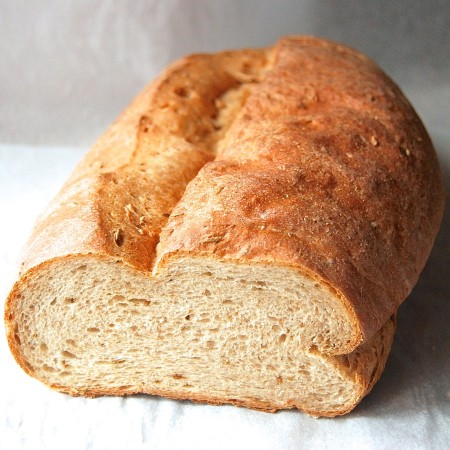
See that loaf above? It was nice and tall in the oven, and gradually settled as it sat.
Hmmm, I thought to myself. Too much liquid.
So I cut back on the liquid. And the loaf still settled.
OK, maybe change the ratio of all-purpose and rye flours a bit, get some more gluten into the structure.
Yes! That worked beautifully. The recipe made two smallish loaves, and they settled just a tad. I DID slash them too deeply, and they ended up with major dents in their top crust – but lesson learned, rye bread doesn’t have the oven-spring white bread does.
I could have stopped with those two pretty-good loaves. But how about making one big, impressive loaf, instead of two smaller ones? Perfect for a really king-sized deli sandwich.
Tried that; result above. The dough looked great; it was wonderfully tall in the oven; but in the end, it… settled. Still tasty; and still great for sandwiches – so long as you don’t mind your sliced bread in rather irregularly shaped ovals.
Bottom line: make two smaller loaves. Use a light touch when slashing.
And have the corned beef and half-sours ready…
I’m using whole-grain rye flour (e.g., pumpernickel) in this recipe. And since whole grain flours usually take a bit more time to absorb liquid than all-purpose flour, I’m going to start by combining pumpernickel, water, and a few other ingredients first.
Place the following in a mixing bowl:
1 cup lukewarm water*
1 cup white rye, medium rye, or pumpernickel flour
4 teaspoons sugar
2 1/4 teaspoons instant yeast
*Or substitute dill or sour pickle juice, which adds another layer of flavor. Depending on the saltiness of the juice, you’ll want to cut back the salt in the recipe to 3/4 teaspoon to 1 teaspoon.
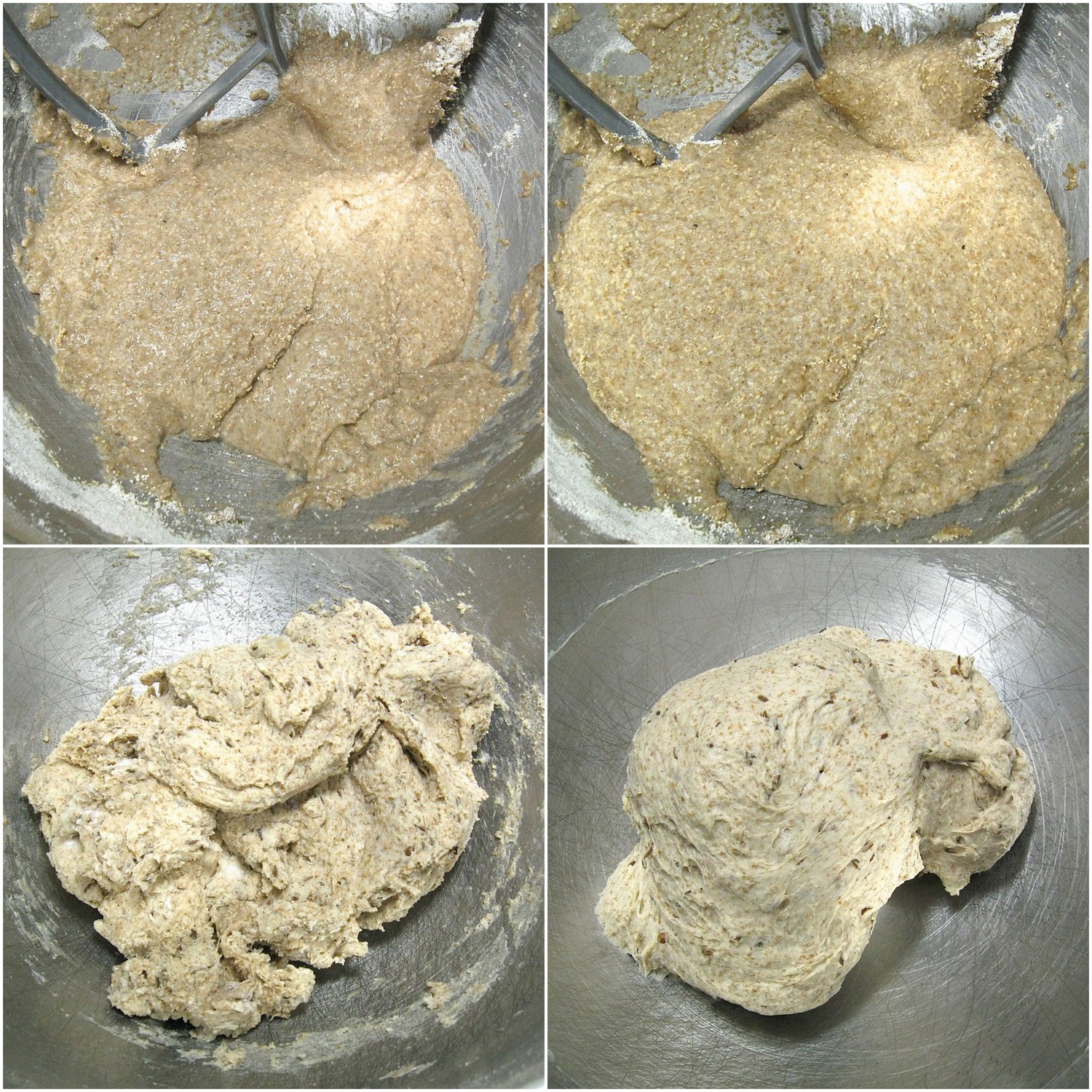
Mix to form a soft batter. Let the batter rest for 20 minutes; giving the rye flour a chance to absorb some of the liquid will make it easier to knead the dough without adding too much additional flour (which would make the bread dry). As you see in the photo above, the batter will become a bit puffy.
After 20 minutes, add the following:
1/2 cup sour cream (low-fat is fine; please don’t use nonfat)
1 to 2 tablespoons caraway seeds, to taste
1 1/2 teaspoons salt
2 1/3 cups (9 7/8 ounces) King Arthur Unbleached All-Purpose Flour or First Clear Flour
3 tablespoons vital wheat gluten or King Arthur Rye Bread Improver, optional, for best rise*
*If you don’t use either the gluten or Improver, increase the all-purpose flour to 2 1/2 cups.
Mix and knead the dough together until it’s fairly smooth. The nature of rye dough is to be sticky, so don’t be tempted to add too much flour.
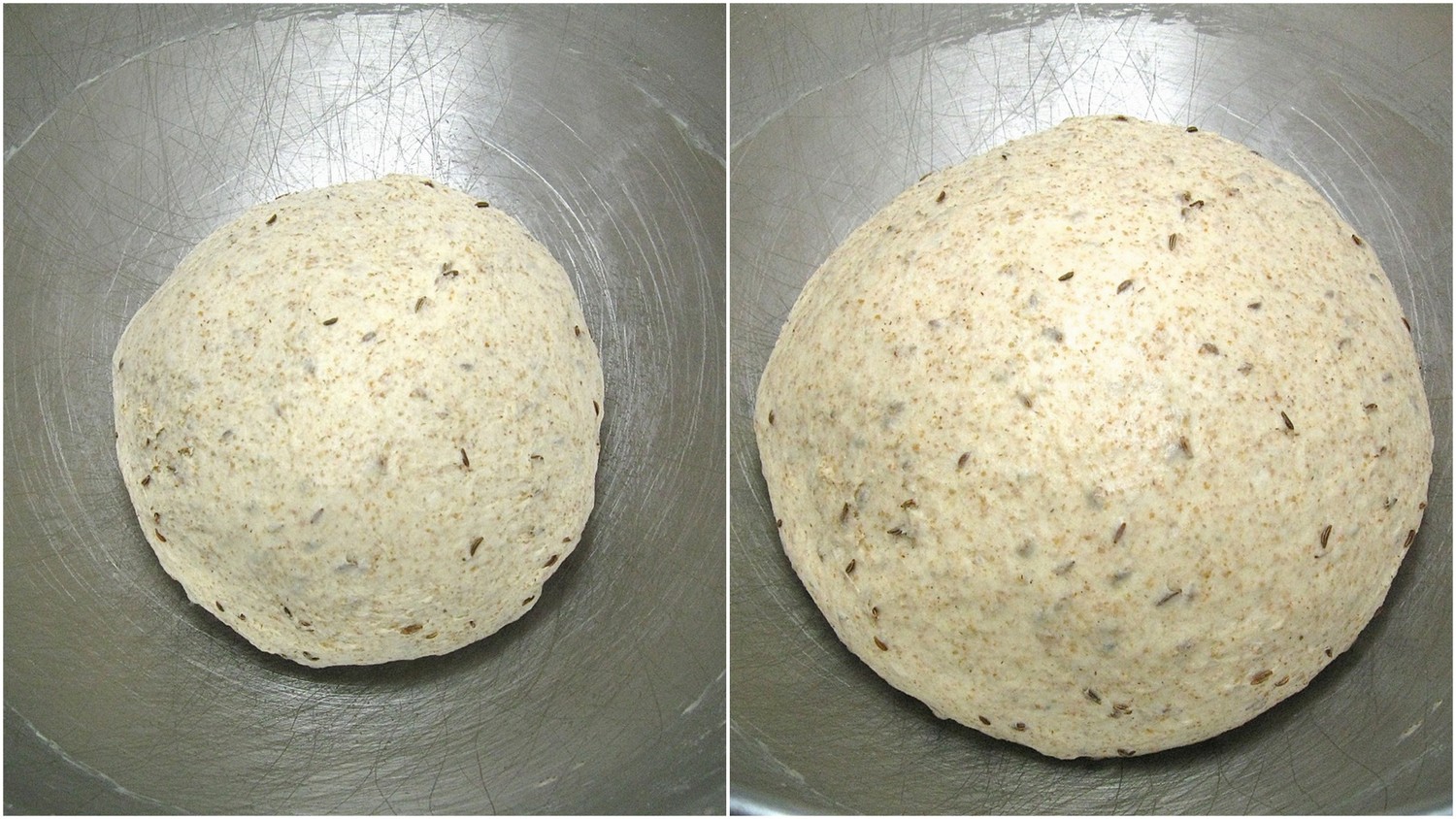
Place the dough in an oiled bowl or large (8-cup) measure, cover, and let it rise until noticeably puffy, 60 to 90 minutes.
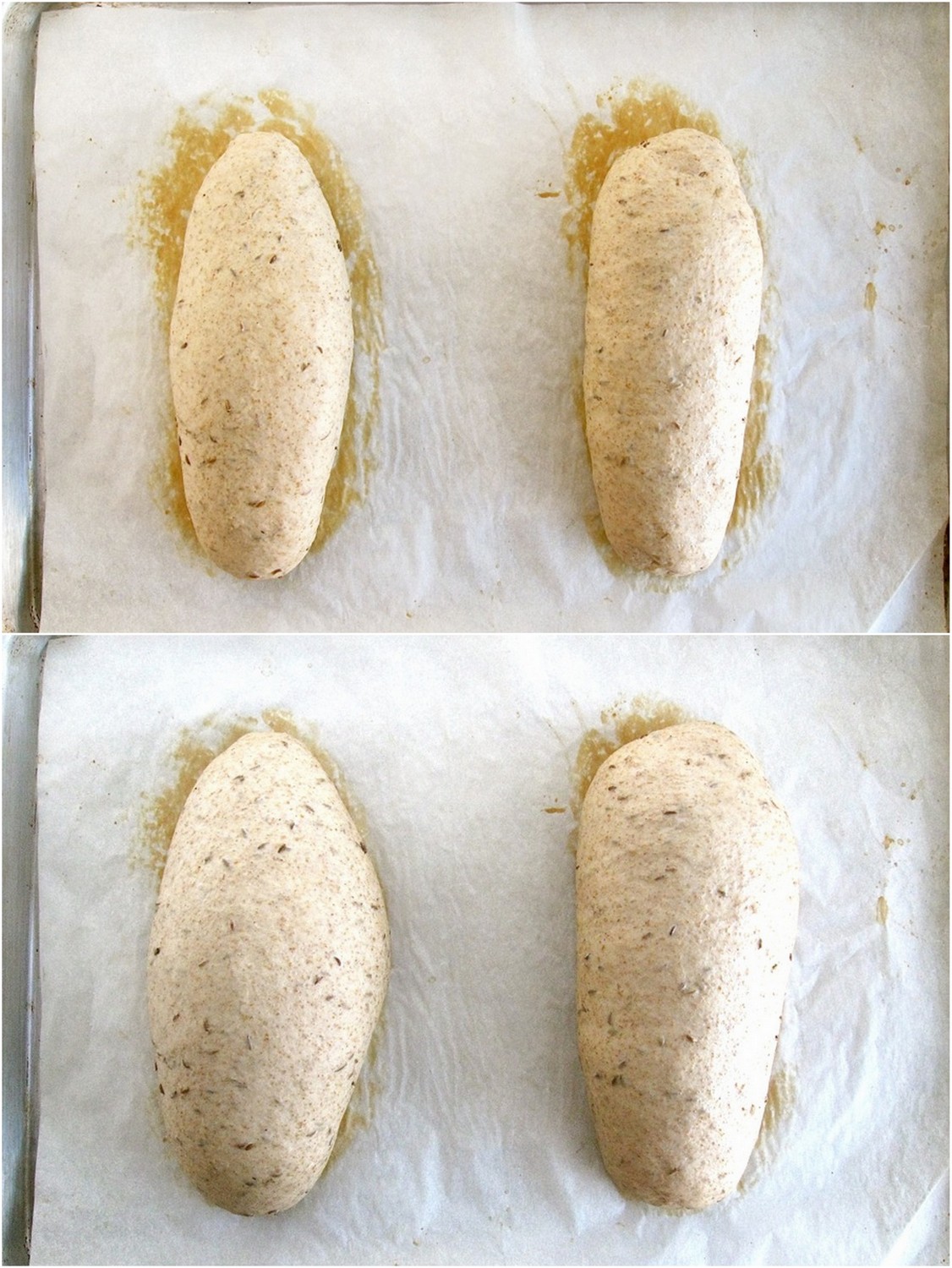
Gently deflate the dough, knead it briefly, and shape it into two smooth oval or round loaves; or one long oval loaf. (As I said, you may find the larger loaf sinks a bit. But if you’re OK with that, go for it; it does make larger slices).
Place the loaf or loaves on a lightly greased or parchment-lined baking sheet.
Cover the loaves, and let them rise until they’re noticeably puffy, about 90 minutes.
Towards the end of the rise, preheat the oven to 350°F.
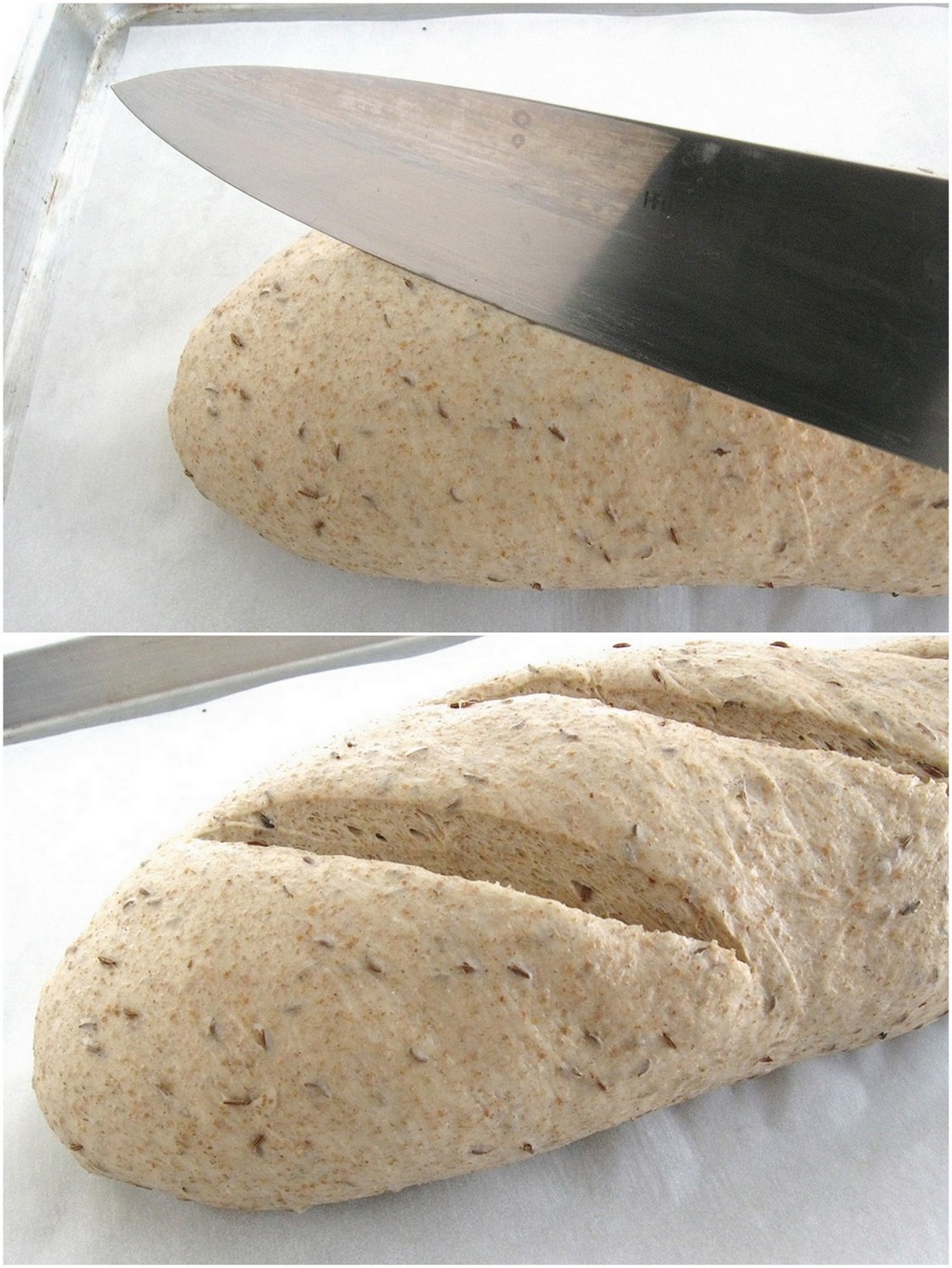
Just before they go into the oven, spritz the loaves with water, and slash them about 1/2″ deep. The oval loaves look good with one long, vertical slash; the rounds, with two or three shorter slashes across the top.
You know how deep I slashed this loaf? Too deep. Do as I say, not as I do!
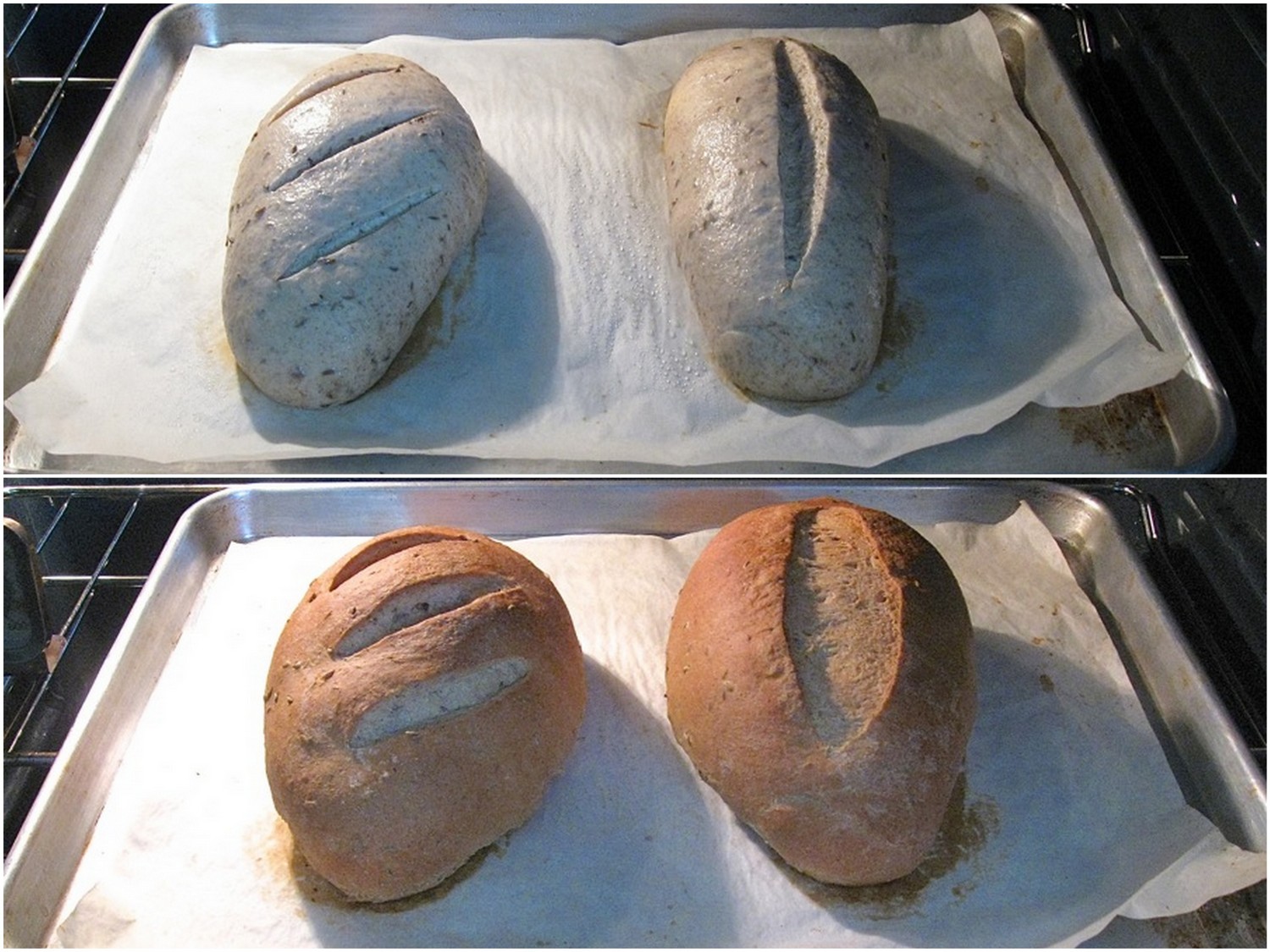
Bake the loaves for 35 to 40 minutes, or until an instant-read thermometer inserted into the center reads 205°F to 210°F. The single, larger loaf will bake for 45 to 50 minutes.
If the bread appears to be browning too quickly, tent it lightly with foil after 25 minutes of baking.
Remove the loaves from the oven, and transfer them to a rack.
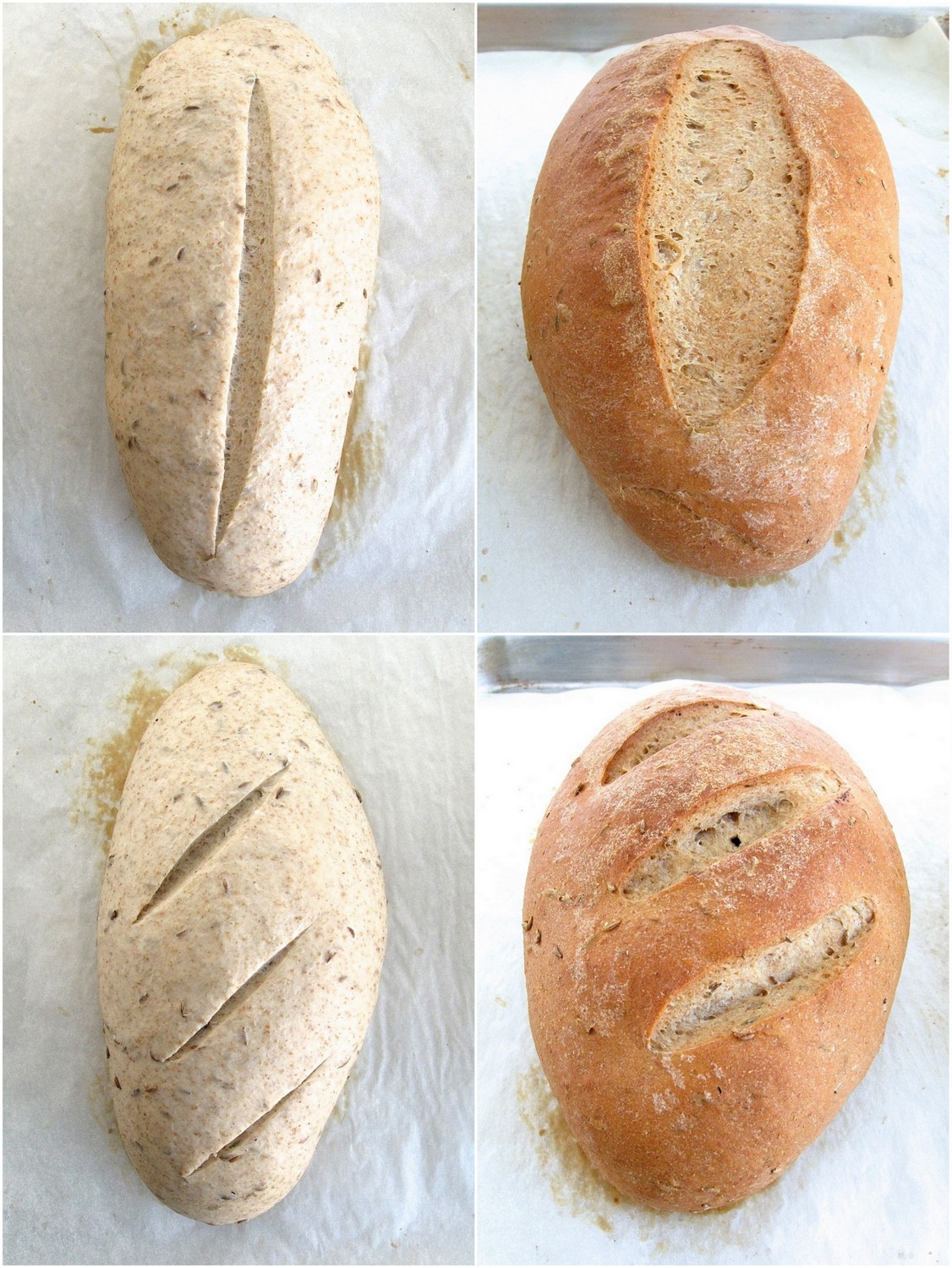
This bread actually does have fairly good oven-spring, as you can see. Looks-wise, I prefer the single vertical slash – how about you?
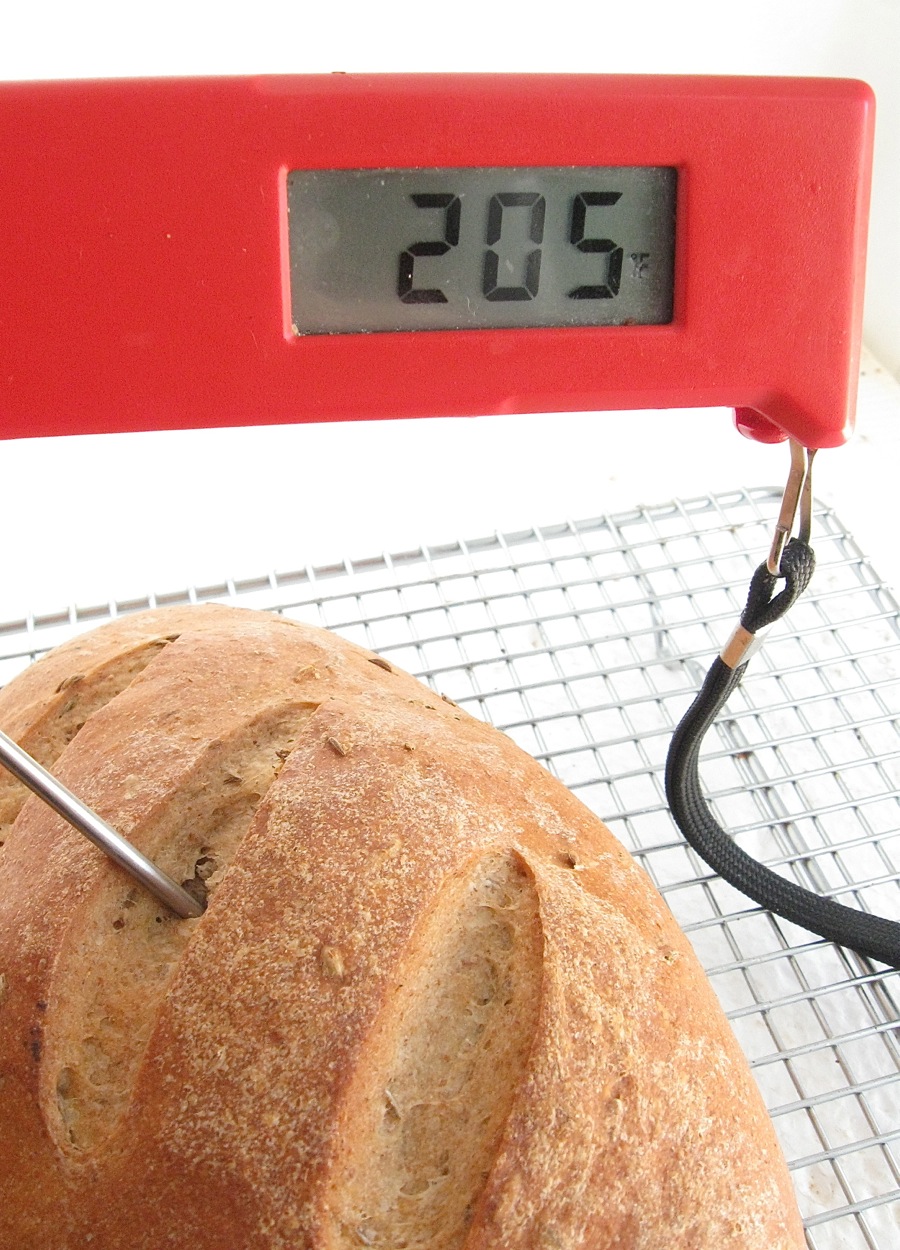
Yup, right on the money. I love my Thermapen; totally takes the guesswork out of “is the bread done?” Some of you can tell by the “hollow thump” test, but I was never very good at that.
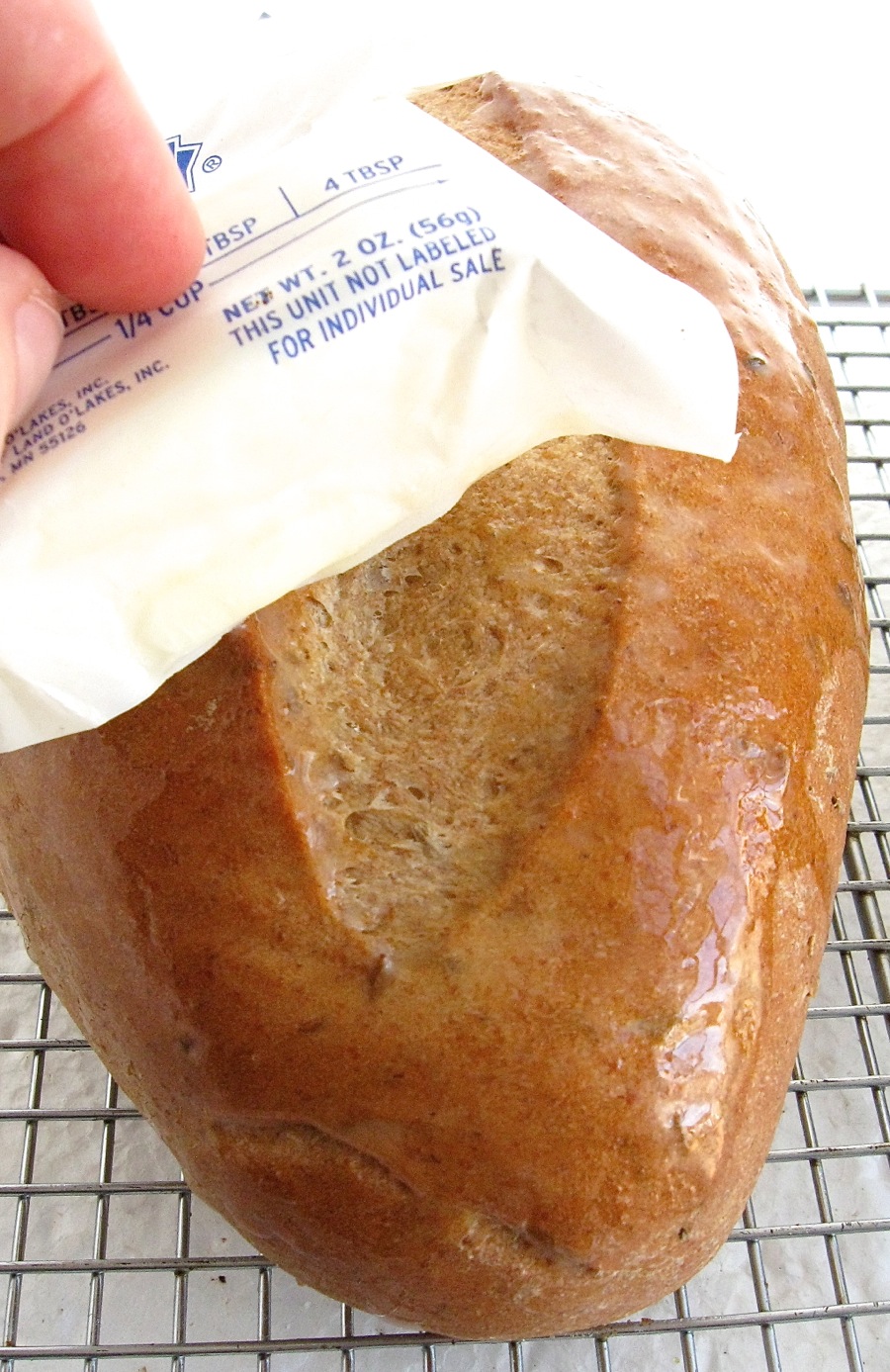
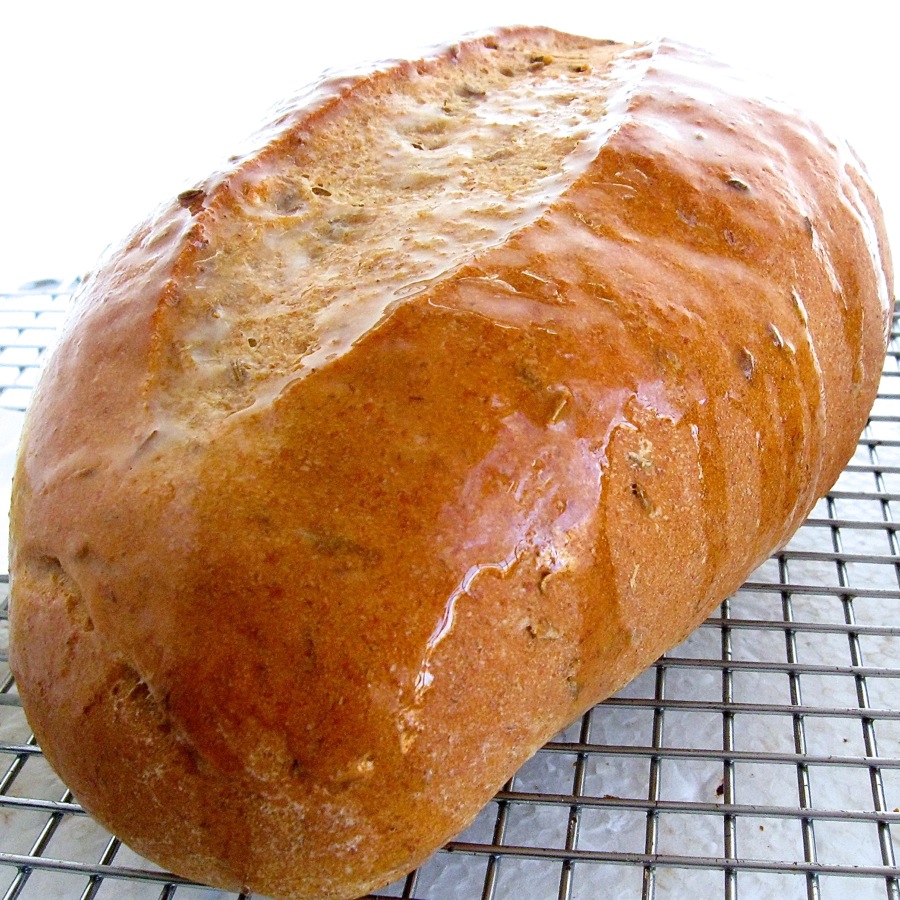
While still warm, brush the loaves with melted butter, if desired; this will keep the crust soft…
…and add flavor, plus a bit of satiny shine.
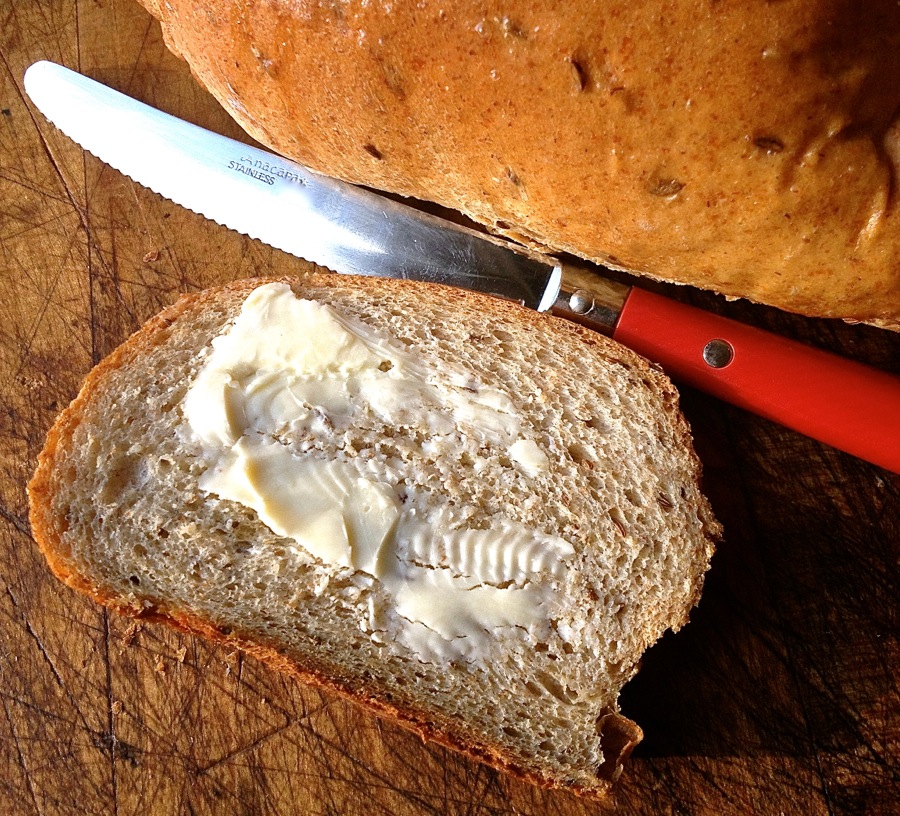
It’s best to let the bread cool completely before slicing, lest you squash it down (which makes the texture gummy). If you truly can’t wait, cut off just the tiniest “sample nub” from one end.
I couldn’t resist enjoying the first piece with a bit of sweet butter… but corned beef, here I come!
Please read, bake, and review our recipe for Caraway Rye Bread.

Print just the recipe.


![photo[1]](/blog/files/2013/02/photo1-450x408.jpg)
March 1st, 2013 at 1:55 am
*drools* Oh my goodness! I have never wanted to reach through my computer screen to grab a loaf of bread more than with that one with the vertical slash. I love bread and carbs. My mom thinks it’s the Mennonite blood in me and I tend to agree. I think I may have to test this recipe at my parents’ house. They love it when I come home and bake for them (my mom likes having me in the kitchen, chatting and working together or have her supervise me if I’m unsure about something and she wants me to try the recipe on my own). Not to mention that we love corned beef a lot! *drools again*
What a lovely comment, Julie – I love to be in the kitchen with my mom, too. Talk about quality time… enjoy! PJH
March 1st, 2013 at 4:36 am
In the double photo with the unbaked loaves, what is the tan stuff on the parchment in the top photo? I didn’t notice it in the following close-ups, just curious if you sprinkled something on the parchment before putting the loaves down.
Will have to give this recipe a try (though will skip the caraway seeds, I don’t mind the flavor but never liked the burst of caraway flavor when biting into one–some bakeries grind the caraway seeds for that reason).
It looks to me like those are marks made by loaves that had been baked previously on that paper. Did you know that parchment sheets are reusable a few times? Once they start turning brown on the edges and become brittle, they should be discarded. ~Amy
Yes, that’s right – it was a second go-around for that particular piece of parchment… PJH
March 1st, 2013 at 6:54 am
Beautiful, PJ! I, too, love this type of rye. When we were kids we used to get a type of soft rye that had dill and onion flakes in it. It was amazing.
I see you have great memories of rye bread just like I do, Cindy – PJH
March 1st, 2013 at 9:53 am
Your bread looks lovely, but there are 2 major no-no’s in there. No sour cream in a deli bread. And no butter, either. Dairy in bread destined for a corned beef or tongue sandwich? Never! We might have to revoke your knish rights.
In all seriousness, though, I use the deli rye recipe from Artisan Bread in 5, with one important addition. I add about 2 tsp.(give or take) of your Deli Rye Flavoring per half batch of bread. It makes a delicious difference. Also, I use the cornstarch wash recommended in the recipe. It gives an authentic deli “sheen” to the bread and helps the seeds adhere to the outside.
Any time my husband cures a tongue or I make chopped liver, I bake up a few loaves or rye bread. It just isn’t the same otherwise.
Alas, my knish rights were revoked long ago… I never do manage to get the Passover baking rules exactly right! So, let’s just agree that this isn’t an “authentic” Jewish rye recipe; simply one that tastes good.
PJH
March 1st, 2013 at 12:06 pm
Re: parchment
Paper burns at about 450 degrees F (remember the old sci-fi novel “Fahrenheit 451″?). So when I bake breads at 425 F, the parchment is browning and brittle afterwards so I toss it. But I do re-use parchment for multiple batches of (the same) cookies, which usually bake at 350-375 F, and then toss the parchment when done as it usually has absorbed some of the butter from the cookies. I do have a Silpat but still can’t do without baking parchment in the kitchen!
March 1st, 2013 at 1:02 pm
Goodness, is it bad that I really love the first photo of the settled loaf the best? The interior just looks soo soft.
This looks like a good weekend project but I have a couple of quick questions if you don’t mind. Is there any reason not to bake these on a pizza stone and would it change the baking time at all? Also, I don’t have any caraway (not a big fan) and have used fennel seeds in its place before, but have you ever tried using dill seeds in rye bread? I have some in the pantry and it just occurred to me they might have a similar flavor but not be quite such a punch in the face. Thanks.
Hey there! I’ve done the dill seeds in rye before, I’m not a caraway fan either. I like the way it turns out. I like mustard seeds too, for a nice pop. The pizza stone, well pre-heated would be just fine. Your baking time will be shorter and the crust a bit thicker but still a very nice bread overall. ~ MaryJane
March 1st, 2013 at 1:31 pm
I have never wanted a sandwich – and a sour pickle!! – more in my entire life. And well done, persevering on the settling issue
I think there are sour pickles in your near future, eh? ~ MaryJane
March 1st, 2013 at 2:28 pm
pj : it is not just passover restriction to not allow meat with dairy. it is the overall kosher rule not to ever mix meat with dairy. thus if you make a meat sandwich your bread must not have any dairy (sour cream, butter, etc) in it. so the overall rule is no mixing of meat and dairy.
Thanks so much for helping us learn, we always appreciate constructive feedback from our fellow bakers. ~ MaryJane
March 1st, 2013 at 3:55 pm
I see so many things on this site that I would like to try…. It would be extremely helpful if Nutritional Info could be included.
It would indeed – and it’s a goal of ours, but thus far unrealized. Currently a lot of work to get it done, and not enough hands on deck; but one of these days… in the meantime, there are some pretty good do-it-yourself sites online for recipes’ nutritional analysis. PJH
March 1st, 2013 at 4:28 pm
Here’s another try with a question; apparently other did no post.
Is there any reason this bread cannot be made in a loaf pan(s)? Was just thinking size would be more uniform.
Can’t wait to try this!
We think this works best on the sheet pan. You could try two small loaf pans, but they might end up sinking. ~ MaryJane
March 1st, 2013 at 5:05 pm
Just took these out of the oven an hour ago. I still don’t know how you knew I was planning to bake rye bread today!
What a great recipe, one I’ll definitely turn to again. Really surprising rise for rye. Loaves turned out wonderful. Husband had wanted takeout pizza for dinner, but hopefully will be happy with homemade Reubens. Thanks as always!
What time is dinner? We’ll be there! ~ MaryJane
March 1st, 2013 at 5:50 pm
Think I’ll give this a go tomorrow. I know my hubby will be happy. It will be a practice run before St Patrick’s Day and the corn beef…..Yummy!!! Thanks PJ
That’s exactly why I published this blog post today – so we could all get in practice for the leftover corned beef on St. Pat’s Day! Enjoy – PJH
March 1st, 2013 at 6:09 pm
Daisy, I was thinking the same thing – are they now reading minds? Just came in from the grocery store with dark rye and regular rye flours in hand. Have corned beef, swiss, saur kraut ready to go.
Not reading minds – just thinking ahead about St. Patrick’s Day corned beef dinner leftovers. Hmmm, what to do with corned beef?
PJH
March 1st, 2013 at 6:49 pm
I’m lucky to be living in ‘deli-land’ south…so I can get really good rye breads, all different types.. But, I did use to enjoy baking my own rye breads, several years ago. Especially!!, after taking your classes! I really like nigella/charnuska/’black onion seeds’, in rye…that nice little ‘peppery’ bite!
Re parchment…when I first started using parchment sheets, years ago, for things like cookies/biscotti, my MIL thought I was being horribly extravagant, until I showed her that the individual sheets could be used, for several bakes, especially with moderate baking temps, and nothing ‘too’ buttery. Then, she became a convert!
Thanks, again, for an interesting post.
Laura
Laura, I need to pick up some of those nigella seeds next time I’m at my favorite coop store – you’re right, they add a nice flavor touch indeed. Thanks for helping us convince bakers about parchment, too! PJH
March 1st, 2013 at 9:21 pm
Can this bread/dough be made in bread machine with same success?
The dough definitely can; not sure about baking it in the machine, as I haven’t tried it, but give it a try if your machine is large enough capacity – let us know how it goes, OK? PJH
March 2nd, 2013 at 12:15 am
I moved to Wyoming about two years ago. It too has a population of only a half million people, but you could fit over 10 Vermonts into the state. Talk about a lack of big cities with good delis! I grew up in Milwaukee, WI, and I really miss the yummy rye breads, deli meats and sausage that were available there. I’ve been longing for some liverwurst–I think it’s time for a trip “back East!” Thanks for the rye recipe–just in time for me to make it this weekend. If only I had some liverwurst to put on a slice . . . or some great pastrami (visions of thick sandwiches dancing in her head). Guess I’ll have to settle for what’s available here (antelope?) to put on my fresh rye.
March 2nd, 2013 at 3:37 am
Just wondering something here. As I was reading your post and you spoke about using pickle juice. Do you mean the juice of pickles or the brine they sit in? I ask because the brine is made with vinegar which would relax the gluten. Which could be a reason for the settling of the finish dough.
Really good insight – and yes, I used the brine. It could indeed be exacerbating the “sinkage,” but the first couple of times I made the dough with plain water, and it still flattened out. I do find the smaller loaves settle less, so I think I’ll stick to the small loaves. Thanks for connecting here – PJH
March 2nd, 2013 at 3:56 pm
I tried to make rye bread today using pickle juice. I think the salt in the juice killed the yeast because I got an anemic rise. I followed the recipe, just subbing the juice and it did not work. Any suggestions?
I’m thinking maybe you didn’t cut back on the salt in the recipe enough to offset the salt in the pickle juice. Or maybe you kneaded in too much flour, and the dough was dry? Or your yeast wasn’t fresh enough? Any of these could contribute to an anemic rise… Call our baker’s hotline if you’d like to chat about this further, OK? 800-827-6836. PJH
March 2nd, 2013 at 11:02 pm
Hi PJ – I’m thinking of adding half a cup of sourdough starter for the same amount of regular flour and water. Probably to the rye flour in the beginning. We will see how it does.
It sounds like you’re on your way to a great rye bread! You’d want to swap out 1/2 cup water and 3/4 cup of flour for the addition of starter to the recipe. Keep everything else the same and keep an eye on the dough: it should be plenty sticky and tacky while coming together! Kim@KAF
March 3rd, 2013 at 11:19 am
I am going to try to make this today with added sourdough starter substituted for some of the regular flour and liquid. Probably between half and a whole cup. Should add some flavor.
Cool idea. Let us know how it goes. ~MaryJane
March 3rd, 2013 at 10:36 pm
Ended up making the rye bread today. Added 1 cup of unfed sourdough starter. Actually took out 4 oz of water and 4 oz of bread flour. I made a batch that was 1 1/2 times the recipe, as I was trying for two slightly larger loaves. Used KA Bread flour instead of the all purpose or first clear. Used 1 1/2 cups of rye flour etc. all done by weight. Ended up with total dough weight of 43 oz, which made 2 each 21.5 oz pre-baked loaves. Came out very tasty, but flattened a little more than I would have liked. I think part of the problem was the 2nd rise when formed into loaves. Let them go for the 90 minutes, and they spread a little too much. Excellent taste and texture, very light and chewy. Next time I will not let them rise as long as loaves, maybe 60 minutes, and may try them in a bread pan to keep them more upright. Other than shape, very happy with the results. Will keep at this as a simpler version of the Marylin’s sourdough rye you have elsewhere.
Thanks so much for sharing your experiences, it is great to see different versions. ~ MaryJane
March 4th, 2013 at 11:27 am
Love this bread …one comment if using the deli rye flavor…….do not breath it in deeply straight from the pouch as it warns….but too late for me ….knocked my socks off! But the stuff is wonderful and use it in all rye breads it does make the difference…More down state (I am in upstate NY) taste !
Take it from me, don’t store it in the same cabinet as your chocolate and caramel blocks either. Rye caramel is blech! ~ MaryJane
March 4th, 2013 at 12:02 pm
I am VERY tempted to try it this weekend! I have a love hate relationship with rye. Love because I love its taste, and a rye-caraway bread sounds like heaven to me!
hate, well, you know why – I’ve had my share of hockey pucks and became a little afraid of rye breads, but you do have enough white flour in it to scare my inner ghosts away (I hope)
will report back!
Can’t wait to hear how it goes! ~ MaryJane
March 4th, 2013 at 1:26 pm
I topped the loaf with KAF “everything bread and bagel topping.” I left out the caraway seeds. I followed the recipe apart from those changes including adding the gluten. I was disappointed that the bread height was not what I wanted. I made a single large loaf and now understand that was likely my problem. Next time will try two small loaves. The flavor and texture were great so I will be making this bread again.
Bob
Glad you enjoyed the flavor, now on to higher loaves! ~MaryJane
March 4th, 2013 at 4:01 pm
I just had to laugh when I read this. I grew up in Chicago, lived in Germany for years, and just love a good rye bread. I almost always make my own now because I’m a Winter Texan, living in the Rio Grand Valley. Believe me when I say there aren’t any deli’s around here like you are talking about! I ordered a Patty Melt sandwich at a local restaurant and it came on Texas Toast. It was good, just left me puzzled about the rye bread factor. When I am in Michigan I can get fairly nice rye bread at the grocery store, but the homemade is the best. At least up there I can buy rye flour at the local grocery. Here they don’t have it at all. We all have to learn to appreciate local color and regional differences. I have never had so much great Mexican food in my life, or better oranges and ruby red grapefruit.
March 4th, 2013 at 5:30 pm
It looks good, I’m irish too, and i won’t be eating corned beef this year, worn out with it, going for chicken but keeping the potatoes and the cabbage (collards this year ).However, is there a way to make this bread without the sour cream ? I prefer my rye without dairy. Also do you have a recipe for raisin pumpernickel rye ? I’d love that. Thanks ! Happy St. Patrick’s day to you.
Abi.
We have many sandwich rye breads on the website – we hope you’ll try one of them for your March baking celebration! Happy Baking! Irene @ KAF
March 5th, 2013 at 12:34 pm
Hi, I am making this right now, I also don’t get very good rye here in East Central Illinois. There are only two of us at home now, would it be better to make a half recipe or can half the dough be frozen before the second rise. I really don’t like freezing already-made bread. Par baking maybe? Thanks!
Given the choices, par-baking is a great way to go, and what you’ll find most often in production kitchens. ~ MaryJane
March 5th, 2013 at 1:03 pm
Thank you SO much for your very prompt response, MaryJane, that’s what I’ll do! Hey, I have to make that corned beef and then Reubens for my husband next week, it will work out great. I love you guys!
~ MaryJane
That sounds fantastic. I haven’t had a good Reuben in awhile. Thanks for the dinner idea for tomorrow.
March 5th, 2013 at 3:35 pm
I’m wondering why you didn’t add a little Vital Wheat Gluten to help with the rise? I usually use it in rye bread. Thanks.
Actually, I did – there’s vital wheat gluten listed in the recipe. And it does help; just trying to find that “sweet spot,” I think, between a dough that’s moist enough to rise well, yet “solid” enough that it can still hold its structure once it’s risen. Practice makes perfect!
PJH
March 8th, 2013 at 1:10 pm
Hi,
I frequently make a sourdough rye and I roll out my dough and then reroll to form the loaf – never had a problem with height. Also, if you have any ethnic E. European stores around, you can buy “ground caraway” powder which adds a nice touch but without the “bite” of actually getting a seed.
March 11th, 2013 at 11:18 am
I tried this recipe this weekend-twice:) I did not add the vital wheat gluten the first batch and when I slashed the tops of the loaves, both deflated. Uh oh, so I tried the recipe again with the vital wheat gluten, thinking that may have caused it. I was in a bread coma watching it rise higher then the last try, thinking I was in the clear, then the slashing-they deflated once again. Sad but true! I have the sharpest knives in town and only went in slightly the second time. Please, I need some expert guidance. The deflated loaves are delicious, but wouldn’t hold any fillings-I would really appreciate your help.
This sounds like the perfect opportunity to problem solve with one of our bakers at our new toll free baker’s hotline (855-371-bake (2253). We’re here from 8 AM to 9 PM on weekdays and from 9 AM to 5 PM on weekends. Looking forward to your call! Irene @ KAF
March 11th, 2013 at 7:19 pm
I would like to say this is a great tasting bread! I tried the recipe with and without the vital wheat gluten and each time I ran into deflated loaves once I slashed them prior to going into the oven. My knife was razor sharp and all 4 loaves deflated. Although they baked into thin loaves, and would not be a candidate for sandwiches, the bread was still delicious with butter! Thanks for great tasting recipe, I just need guidance with the “slashing”., what could I have done to avoid this? Hope to hear from you soon!
It’s possible that your loaves proofed too long before baking: when you went to slash them, they clearly deflated. I recommend allowing the dough to just barely double before you slash them. You can also try reducing the amount of liquid in the recipe by 2 Tbs to see if that gives you a better shape and structure! Kim@KAF
March 17th, 2013 at 7:38 pm
I had the same problem with my loaves collapsing a little after the slash, but otherwise was very happy with the rises I got. Usually my bread doesn’t rise very well, and this was the first recipe I’ve tried using vital wheat gluten- it made a huge difference!!! Bread is cooling now, waiting to make Reuben sandwiches for dinner tonight!
Sorry, did the rumbly in my tumbly disturb you? Dinner sounds great! ~ MaryJane
March 18th, 2013 at 9:27 am
This is the second loaf I’ve made in the past few weeks and this one was even better than the first. Added about 1/4 cup additional flour during knead and shaping into loaf. Made one large lovely loaf. Excellent for the grilled Ruebens we had for St. Patrick’s Day dinner. And, just as good toasted this morning with sour cherry preserves. Rye bread has always been a struggle for me and this is a great recipe. Thanks again.
Wow, I’ve never heard of rye and sour cherry, but I love love sour cherry, so thanks for the tip! ~ MaryJane
March 25th, 2013 at 11:17 pm
PJ & Mary Jane – Tried this a few weeks ago with sourdough, and after ordering first clear and rye improver from KA, made it again with the following: Doubled the recipe, as I wanted two larger sandwich loaves. Used 1 cup of sourdough starter (8 oz), substituted for 4 oz of flour and 4 oz of water. From the older KA recipe for Steph’s rye, got the idea to make a small sponge, but did it by feeding the starter with 1 cup of the rye flour and 1 cup of water (with a pinch of yeast) and letting that sit over night. Next day added the other cup of rye flour and rest of water, and let sit 20 minutes as per recipe, and then added other ingredients for dough. Used all first clear flour and the rye improver. Ended up with 57 oz of dough. Split into two loaves, and used 4 1/2″ x 8 1/2″ pans. Very tasty, soft and beautifully shaped.
Next time, I think I will make the sponge with the sourdough and all of the water and all of the rye flour for overnight. I may also use KA bread flour half and half with the first clear (cost per loaf would be less). I think the sponge really improves the quality.
Fantastic ideas! I would certainly try the all-starter method (no yeast) and see how that improves the taste and texture. The sponge definitely improves the taste of the bread, but it does often need to be worked with in about 8-12 hours depending on how much food the starter has (8 oz of starter–approx. 1 heaping cup–will go through 2 cups flour, 1 cup water in 12 hours, just so you know! After that 12 hours, it will need to be fed again). Best of luck! Kim@KAF