Home | About | Contact
800.827.6836 | Norwich, Vermont

shopping cart  
0 items in cart | checkout

introducing gluten-free flour, mixes and recipes by King Arthur Flour

Our award-winning gluten-free mixes are the best you’ll ever taste. And our selection of ingredients, delicious recipes, and step-by-step recipe photos will take your gluten-free baking to new heights. Have any questions? We have answers!

Gluten free bread mix by King Arthur Flour

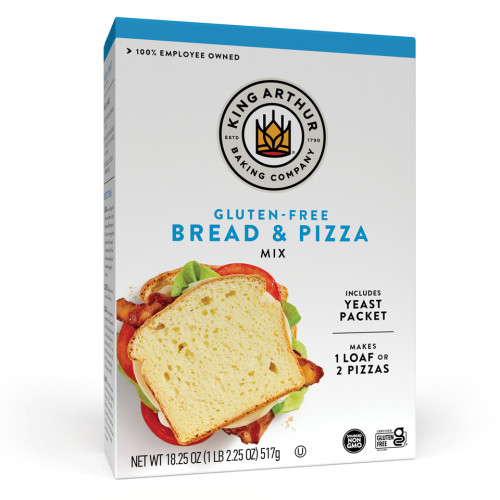
gluten-free bread mix

Now, enjoy your favorite sandwich on gluten-free bread. Our easy mix makes a high-rising, moist and tender loaf, perfect for everything from PB & J to breakfast toast.

It was wonderful to have warm bread again - soft on the inside, crunchy crust on the outside...” – Catherine - Holiday, Florida

gluten-free

recipes»

gluten-free

ingredients»

questions?

about gluten-free baking...

we have answers!


Frequently asked questions

How can I be sure King Arthur mixes are 100% gluten-free?

gluten free

Our mixes, and some of our baking ingredients, are Certified Gluten-Free™ by the non-profit Gluten-Free Certification Organization (GFCO), a program of the Gluten Intolerance Group (GIG®). GFCO products are tested to be less than 10ppm (parts per million) gluten. This is stricter than even the FDA requirement of less than 20ppm gluten.

What about other allergens? Are those taken into account, too?

Yes. Both our Certified Gluten-Free products, and the manufacturing facility, are free from the most common allergens: wheat, nuts, tree nuts, fish, shellfish, soy, eggs, and dairy. That said, our mixes may require eggs and/or dairy; please take a look at their packaging (available for viewing on product information pages) to see what’s required to bake them.

I see your mixes are kosher. Can you clarify?

Chicago Rabbinical Council logo

Our mixes are certified kosher by the Chicago Rabbinical Council.

How can a flour company be absolutely certain no gluten gets into its gluten-free products? Are these products packed at King Arthur, or somewhere else?

Our gluten-free products are packed offsite, at a dedicated gluten-free facility. This facility processes only gluten-free foods, and all personnel are carefully trained in practices and procedures that support gluten-free manufacturing of food products.

What’s the difference between gluten-free and wheat-free?

Gluten-Free Sandwich Bread recipe

Gluten is a combination of proteins that form an elastic network that gives wheat-, oat-, barley-, and rye-based baked goods their structure. Wheat-free is the absence of any part of the wheat berry; gluten-free is the absence of gluten – which again, can be found in oats, rye, and barley, as well as in wheat.

Why does anyone want to bake without gluten? Isn’t it a key ingredient in all baked goods?

Various health concerns prompt people to bake gluten-free (GF), including a gluten allergy, wheat reaction, or celiac disease.
How do I know which baking ingredients contain gluten, and which are GF?

whatcontainsgluten.com is a good place to start. Also, look for packages that contain the words "gluten free;" or those bearing a "gluten free" symbol.

What’s the best way to store gluten-free items?

Gluten-containing flours and mixes should be stored on a shelf that is physically lower than any gluten free ingredients, flours or mixes to avoid contamination of your GF ingredients. If you are concerned about the possibility of the gluten-free and gluten-based ingredients getting mixed up, store the gluten-containing ingredients in a separate space in your kitchen.

How do GF baked goods differ from regular ones?

When baking GF for the first time, it helps to manage your expectations. You’ll never replicate exactly your favorite gluten-based baked treats. But if you learn what GF baked goods taste like, and their typical texture, it’s easier to track your progress towards your goal of great GF baking.

Because they lack the structure gluten adds, some GF baked goods may seem more crumbly than their wheat-based equivalent. Because of the combination of flours used, they also may become stale more quickly. As you learn to bake gluten-free, you’ll figure out which ingredients, and combinations of ingredients, yield your favorite combination of taste, texture, and freshness.

Happily, baked goods made from King Arthur Flour gluten-free mixes were developed to stay fresher longer. If you have any leftover treats you don’t plan on enjoying within a few days, wrap them tightly in plastic, and freeze for up to a month or so.

Will the gluten floating around in my kitchen from my regular baking "contaminate" any GF baking I try?

According to the Gluten Intolerance Group (GIG) standard flour dust can hang in the air up to 24 hours, so when baking GF in an area that also handles gluten, you can do your GF baking first and store it in a covered container or wait 24 hours after baking with gluten-based ingredients before baking GF. Before starting, clean your baking area thoroughly – that means wiping down mixers, counters and working with clean dishes and utensils. Anything that the gluten-containing products touch that will be used for GF baking should be well cleaned to avoid contamination.

People handle being GF in different ways. Some folks find it easier to eliminate gluten all together from their kitchens. Others choose to use a dedicated bread machine for gluten-free baking along with separate non-gluten exposed utensils. No matter what your concern, a clean kitchen is always a good idea.

How do I turn a regular recipe into a GF recipe?

Gluten-Free Popovers recipe

With lots of experimenting!

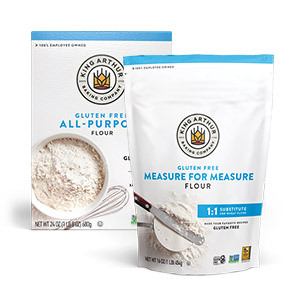
You’ll need to replace any flour containing gluten with a GF blend. Try our King Arthur Gluten-Free Multi-Purpose Flour. Or make your own GF blend, as follows:

Whisk together 6 cups (32 ounces) King Arthur stabilized brown rice flour; 2 cups (10 3/4 ounces) potato starch; and 1 cup (4 ounces) tapioca flour or tapioca starch. Store airtight at room temperature. Note: You can substitute white rice flour for the brown rice flour if you like; it'll make your baked goods grittier (unless you manage to find a finely ground version).

Recipes using less than ½ cup flour can usually be converted to GF simply by substituting a GF flour blend, such as the one above.

It’s best not to try to convert an existing yeast bread recipe to GF. Better to use a yeast bread recipe specifically developed to use GF ingredients.

IMPORTANT:
Xanthan gum is the “glue” that steps in for gluten, holding baked goods together. You’ll need to add xanthan gum to most GF recipes, for best texture. Try using a scant ½ teaspoon per cup of GF flour in your recipes.

Could you tell me a little bit about what the most common GF flours do in your recipe? Like, what do they add to the final texture, taste, etc.

Rice flour (brown or white), potato starch or potato flour (they’re different), tapioca flour/starch (they’re the same), cornstarch/cornmeal, and our Ancient Grains Blend are some of the common GF flours used in GF baking.

Rice flour
Rice flour is used in many commercial gluten-free mixes. There are several types to choose from, and most recipes will specify which to use: regular long-grain rice flour, medium-grain rice flour, short "sweet" rice flour, or brown rice flour.
Purchase stabilized brown rice flour when possible, as rice bran gets rancid very quickly. Rice flour is used as the backbone of many GF recipes, but if used alone will have a gritty texture.
Potato starch
This pure white starch feels similar to cornstarch, and contains no fiber. It’s used to smooth the texture of GF baked goods.
Potato flour
Used in small amounts in bread, potato flour includes the skin of the potato as well as its flesh. It contains fiber, and adds noticeable potato flavor to GF baked goods. It’s particularly good in yeast breads.
Tapioca starch
Tapioca starch (a.k.a. tapioca flour), also known as cassava or manioc, is a pure white starch. It’s used to add “body” to baked goods, especially yeast breads, where it imparts chewy texture. Too much tapioca can make baked goods rubbery, so measure carefully.
Gluten-Free Ancient Grains Drop Biscuits recipe
Cornstarch
Cornstarch, a familiar pantry ingredient, is pure white starch. It lightens the texture of GF baked goods, without adding any flavor.
Cornmeal
Cornmeal can be either whole-grain (ground from the entire corn kernel), or de-germed (the germ removed to preserve freshness). It adds wonderful corn flavor to GF treats, but no structure; it must be used in conjunction with other flours.
Ancient Grains Blend
Ancient Grains Blend, a blend of four whole-grain GF flours (amaranth, millet, sorghum, and quinoa), adds nutrition to GF baked goods. It doesn’t add to structure, so must be used in conjunction with other flours.

Because many gluten-free grains are not used in whole form, a gluten-free diet may lack fiber. Choosing whole grains where possible is important, but you may also choose to use a fiber such as Hi-maize natural fiber (a corn product), or small amounts of bean flour. When choosing bean flour, be sure to buy one that’s been processed from cooked beans. Cooking makes the flour better-tasting, and easier on the digestion.

What others are saying…

2010 sofi Silver Award Winner

2010 National Association for Specialty Food Trade, Inc. silver award winner

King Arthur Flour’s new gluten-free baking mixes were selected from among 200 entries as a sofi Silver Finalist, Outstanding Product Line, by the National Association for the Specialty Food Trade. The annual sofi awards recognize outstanding innovation in specialty foods.

Product reviews and feedback

King Arthur Gluten-Free Brownie Mix: hubpages.com »

“These are just like the brownies my grandmother used to make - tender and thick on the inside, with a crackly top, and those delectable crisp edges that we all fought over as kids. These do NOT taste gluten free. I kept having to remind myself it was ok to eat it - that's how good they are….My husband and son, who normally approach gluten free desserts with a bit of trepidation, declared these delicious over and over again. I heard more than one "WOW!".”

King Arthur Gluten-Free Pancake Mix: triumphdining.com »

“ After trying out the new gluten-free pancake mix from King Arthur Flour Company this morning, I am going to have to skip lunch. I ate too many pancakes… My dad said they “taste like pancakes,” which, although a bit under-descriptive, is entirely the point of the mix. ”

King Arthur Gluten-free Mixes: celiac-disease.com »

“I have tried many gluten-free brownie mixes since being diagnosed and many of them have been disappointing and grainy, but this is definitely one of my new favorites. My gluten-able friends couldn’t stop eating them, and took home half the batch. These were definitely a winner.”

King Arthur Gluten-Free Mixes: triumphdining.com »

“ The brownies reminded me of those I ate as a child. They are rich, moist, chewy and have a flaky top… I’m going to have a agree with the company’s slogan – these mixes were definitely worth the wait!”

General tips

Gluten-Free Pumpkin Muffins

GF muffin, quick bread, cake, and yeast bread recipes call for beating with an electric mixer – hand, or stand. Why? Because without gluten, baked goods have a hard time rising. Thorough beating adds air to the batter or dough, producing a lighter-textured baked good.

The vast majority of bakers are unable to beat batter long enough or hard enough by hand to lighten it sufficiently; thus our strong suggestion (read: requirement) that you use an electric mixer, for your best chance at success.

In general, bringing eggs, butter, milk, and other refrigerated ingredients to room temperature before using makes them easier to work with, and will yield a better final product than will cold ingredients.

Mix tips

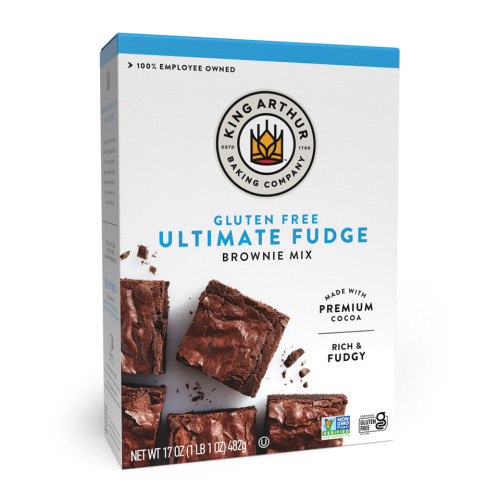
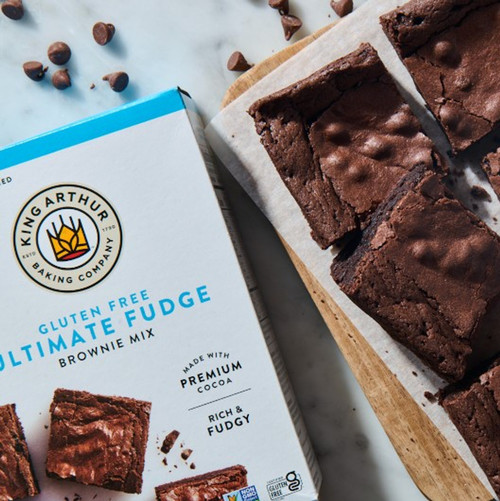
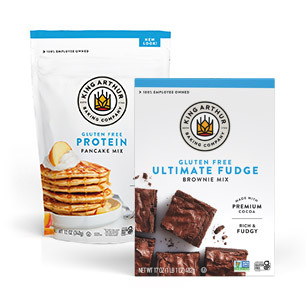
Brownie mix

gluten free pumpkin muffins

Customize your brownies by adding 1 cup chocolate chips or 1 cup chopped nuts to the batter.

If you use a stoneware, glass (e.g., Pyrex), or dark metal pan to bake your brownies, lower the oven temperature by 25°. This will help your brownies bake all the way through without overly browned edges.

For thinner brownies, bake in a 9” x 9” pan (instead of the 8” x 8” pan called for), in a 350°F oven, for 25 to 30 minutes.

Running a thin spatula around the edge of the brownies as they come out of the oven will help them settle evenly.

Brownies may be drizzled with a glaze made of 1 cup chocolate chips, ¼ cup heavy cream, and 1 tablespoon butter. Heat in the microwave till the chocolate softens, then spread over the cooled brownies.

Bread mix

Substituting 4 egg whites for the 3 eggs called for in the mix directions will give you a lighter-colored bread. Pasteurized liquid egg whites also work well. If you’re watching your cholesterol, or like a very white bread, feel free to make this substitution.

Make sure you beat the dough thoroughly, using al electric mixer. It won’t feel at all like regular yeast dough. It’ll be very soft, and silky smooth; but it won’t be elastic, like a typical wheat-based yeast dough.

Wet your fingers, or a bowl scraper, and smooth the top of the dough once it’s in the pan. The smoother it is going into the oven, the nicer your baked loaf will look.

Bread is soft and fairly moist the first day it’s baked, but dries out very quickly. For best results, any bread not eaten the first day should be toasted before serving. Or slice bread, wrap several slices together in plastic, and freeze for up to a month or so. Toast before eating.

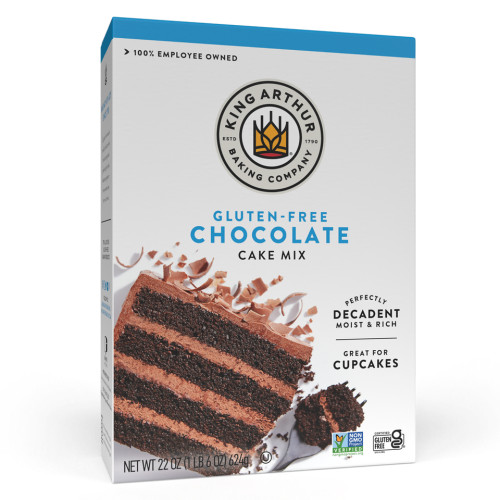
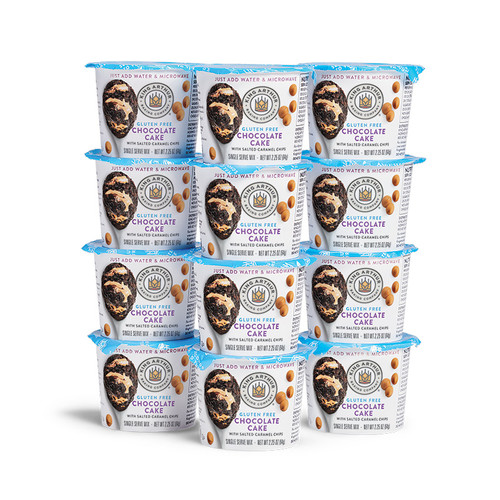
Chocolate cake mix

Insulated cake strips help your layers bake level, rather than domed in the center.

Want to bake a bundt-style cake? Choose a standard-size bundt-style pan, and bake for about 40 minutes, till the cake tests done.

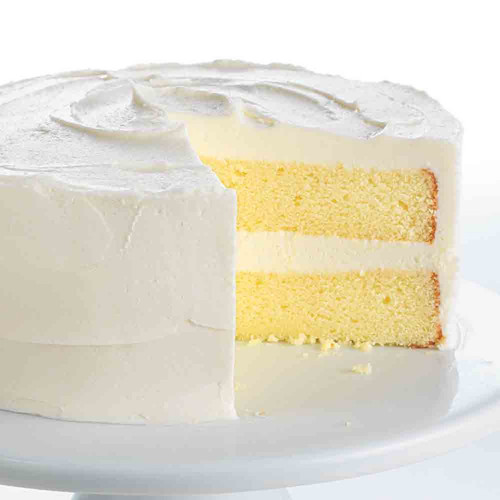
Our cake mix will make two 8" or 9" layers; 24 cupcakes, or a 9" x 13" sheet cake.

Bake as follows:

  • 8" layers: 35 to 40 minutes at 350°F
  • 9" layers: 20 to 25 minutes at 350°F
  • 9" x 13" sheet cake: 20 to 25 minutes at 350°F
  • Cupcakes: 18 to 20 minutes at 350°F

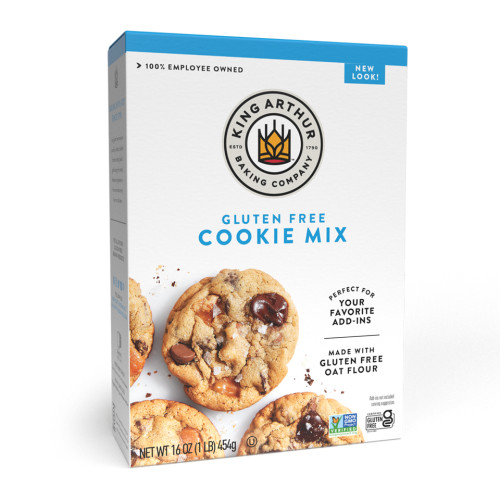
Cookie mix

gluten free pumpkin muffins

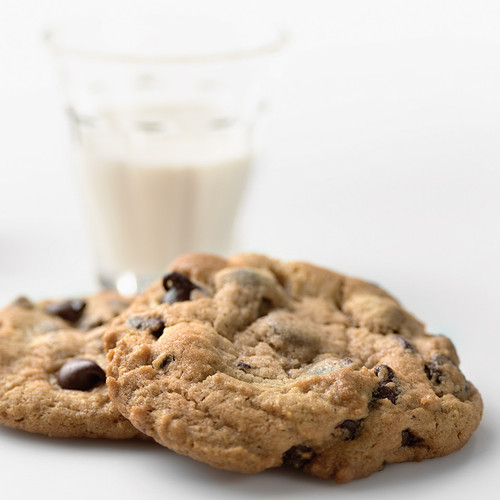
Cookie dough needs to be refrigerated for at least 1 hour before baking (or for up to 2 days), so plan accordingly. Dough may be scooped into balls, wrapped well, and frozen for up to several months. For hot homemade cookies, FAST, simply place frozen dough balls on a baking sheet, and bake for a minute or so longer than the directions indicate. To make sure your oven temperature is exactly right, bake a sample cookie first. If the cookie spreads too much, raise the oven temperature slightly. If it doesn't spread enough, lower the oven temperature slightly, or pat the dough down slightly before baking.

Cookies will stay nice and fresh for a day or so after baking. Freeze for longer storage.

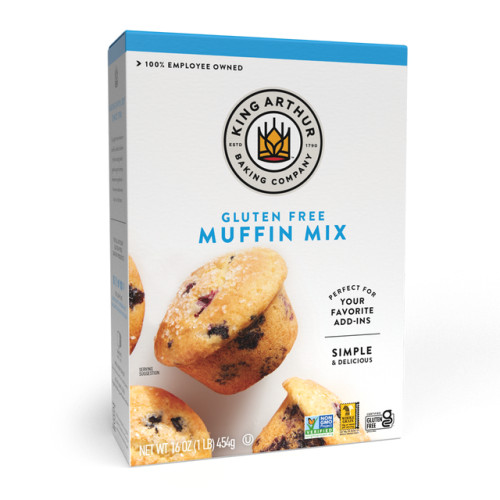
Muffin mix

Don't be tempted to make these muffins into a quick bread; a loaf will turn out unpleasantly dense.

Pancake & waffle mix

You can make pancake or waffle batter ahead, then refrigerate overnight. If next morning the batter is thicker than you like, simply thin it with a bit of milk.

Dress up your pancakes by stirring fresh fruit (diced apples or peaches, blueberries…), or chocolate or cinnamon chips into the batter before cooking.

Pizza crust mix

Be sure to lightly grease your baking sheet or pizza pan, then drizzle with olive oil. The oil will give the crust wonderful flavor and pleasantly crisp texture.

If you make a thick rather than thin pizza crust, expect it to be soft, not chewy.

Yeast bread

Gluten-Free Sandwich Bread recipe
  • Measure carefully. The flour/liquid ratio is important. Too much flour, your bread will be dry and crumbly. Too much liquid, and it may sink on the top. Measure flour by fluffing it in the container, sprinkling it into your dry measuring cup, then leveling it off. Don’t tamp it down.
  • Heat liquids to lukewarm, about 100°F
  • Unlike most stiff, kneadable yeast doughs, GF bread starts with a batter, not a kneadable dough. Beat the batter for at least 3 minutes at medium-high speed of a stand mixer or electric mixer. You can’t mix GF yeast bread batter by hand; you must use a machine of some kind – stand mixer, electric hand mixer, or bread machine set on the dough cycle.
  • Your wet fingers (or a wet plastic bowl scraper or spatula) are the best tool for smoothing the top of sticky, unbaked bread dough in its loaf pan.
  • For best texture, try baking breads in smaller loaf pans. Make two loaves from one recipe by dividing the dough in half, and baking each in a separate smaller pan.
  • After the first day, GF bread is best served toasted.
  • Even “failure” loaves can be made into GF bread crumbs. Top casseroles with bread crumbs, add as a filler to meatballs, or use anywhere you’d use regular bread crumbs.

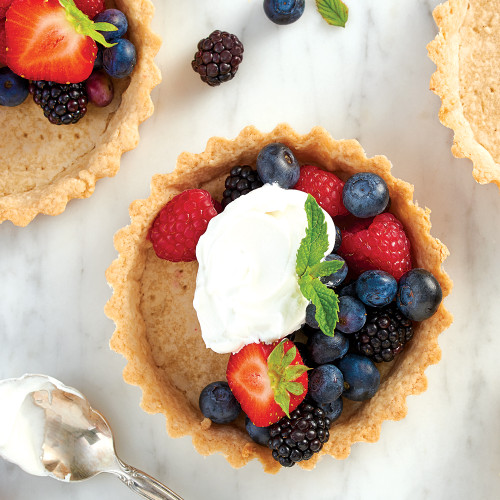
Pie crust

Gluten-Free Pie Crust

If the bottom crust cracks or breaks while you’re transferring it to the pan, simply press the cracks together again. It’s OK; no one will see the cracks. But you do want to prevent filling from leaking out the bottom of the crust.

If your top crust cracks while you’re placing it over the filling, that’s OK, too. It needs some vents to release steam, anyway. Brush with milk, sprinkle with coarse sugar, and tell everyone it’s a rustic-style pie.

The top of a double-crust pie will brown better if you brush it with milk and sprinkle it with sugar, which will also add sparkle and sweet crunch.

Making fruit pie?
For best results, use a metal pie pan, aluminum preferred. Bake at 425°F on the bottom rack of your oven for 20 minutes, then reduce the heat to 350°F, move your pie to the middle rack, and continue to bake until the crust is golden and the filling is bubbly.
Making a custard-type pie, e.g., pumpkin?
We recommend pre-baking the crust, then cooling it for 15 minutes before pouring in the custard. To pre-bake the crust, preheat the oven to 375°F. Line the bottom with pie weights, add a shield to the edge of the crust to prevent over-browning, and bake for 25 minutes. Remove the weights, and bake for an additional 10 to 15 minutes (still with the shield), till the crust is a light golden brown. Bake the custard-filled pie at the moderate heat such pies require; your recipe will indicate what that is. Don't forget the pie shield for this second bake as well.

Cakes, muffins, & quick breads

gluten free
  • Try adding a couple of tablespoons of applesauce (or puréed fruit baby food) or yogurt to cake, muffin, and quick bread batters to help the finished product retain its moisture and stay fresher longer.
  • If your cakes and muffins are consistently dense and doughy, try separating any eggs called for in the recipe, and beating the whites separately, then folding them in.
  • To prevent sogginess, remove round cake layers, muffins, and quick breads from the pan as soon as you safely can, and place them on a rack to cool. Generally, about 2-3 minutes of cooling for muffins, and 10 minutes for cake layers or quick breads is sufficient.
  • Cake batter may be thicker than you’re used to; that’s OK.
Gluten-free Passover Flourless Chocolate Cake
  • Our King Arthur Cake Enhancer increases the shelf life of GF cakes, keeping them moister and fresher longer. Use as directed.
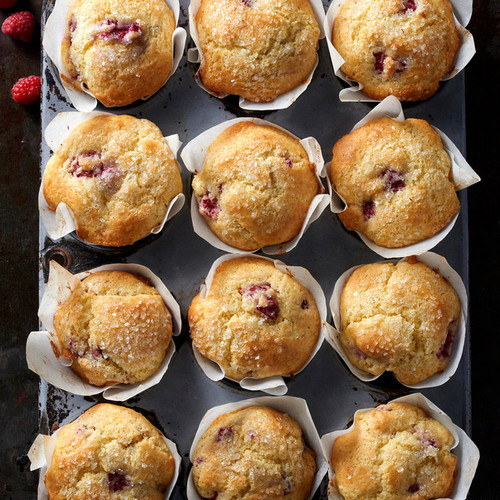
  • Muffin batter may be much stickier than you’re used to; that’s OK.
  • Add flavor and interest to muffins and quick breads with chips (chocolate, butterscotch, cinnamon…), dried fruits, or nuts.
  • When baking muffins, fill the cups to the rim with batter.

Cookies

gluten free

Cookie dough tends to spread more easily when baking. Chill the dough before scooping, and bake on parchment, if possible, to limit spread.

Another way to limit spread (and boost flavor!) is to add chips, nuts, or dried fruit to cookie dough.

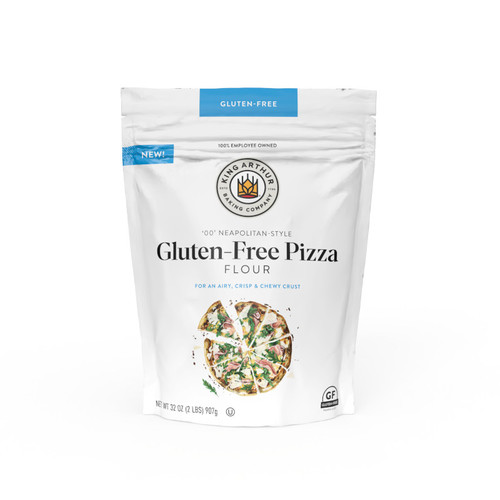
Pizza crust

gluten free

For crisp, thin-crust pizza, use a dark pan. Spray the pan with non-stick vegetable oil spray, then drizzle with olive oil; use about 1 tablespoon oil for a 12” pizza. The oil increases the crust’s crispness and flavor.

Thicker crusts will be soft, not chewy. Manage your expectations, and you’ll be satisfied.