Homemade Pierogi

star rating (12) rate this recipe »
Recipe photo
Hands-on time:
Total time:
Yield: 1 to 2 dozen pierogi, depending on size
Recipe photo

Pierogi, or boiled filled dumplings, were originally Polish peasant food. But these savory dumplings eventually overcame class boundaries and became popular among those in all walks of life. They're … More »

Homemade Pierogi

star rating (12) rate this recipe »
Hands-on time:
Total time:
Yield: 1 to 2 dozen pierogi, depending on size
Published: 11/15/2010

Ingredients

Dough

Filling

  • 1 cup warm mashed potato
  • 1 cup sharp cheddar cheese, shredded

To finish

  • 1/4 cup butter
  • 2 large shallots, diced; OR one medium onion, thinly sliced

Tips from our bakers

  • If your filling is a bit watery due to the potatoes, add a tablespoon of flour to help thicken it up.

Directions

1) To make the dough: Mix together the flour and salt. Add the egg to the flour and combine. The dough will be quite clumpy at this stage.

2) Work in the sour cream and soft butter until the dough comes together in a slightly rough, slightly sticky ball.

3) Using just your fingertips, knead and fold the dough without adding additional flour until the dough becomes less sticky but still quite moist.

4) Wrap the dough well in plastic wrap and refrigerate for 30 to 60 minutes, or up to 48 hours.

5) To make the filling: Combine the warm mashed potato and cheese. Stir and mash until the cheese is melted and the filling is cool to the touch. Taste and adjust the seasonings with salt and pepper.

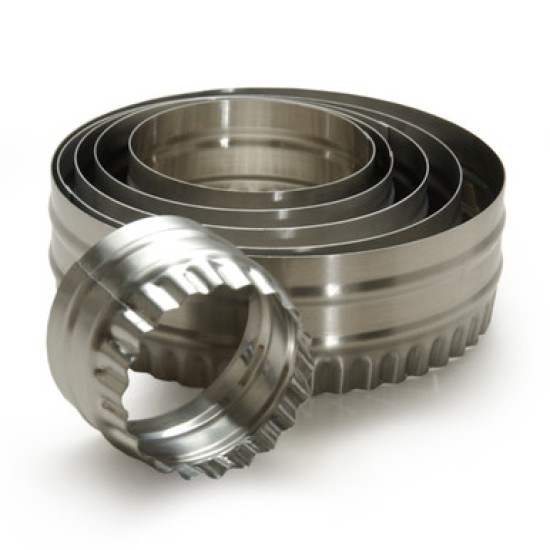
6) To fill the pierogi: Roll half the dough 1/8" thick. Use a 2" round cutter to cut circles of dough. Repeat with the other half of the dough. Save the scraps; these can be snipped into small pieces and added to simmering soups.

7) Place 2 teaspoons of filling on each round of dough. Gently fold the dough over, forming a pocket around the filling. Pinch the edges of the pierogi to seal, then seal again with the tines of a fork.

8) At this point the pierogi can be frozen for up to 4 weeks, or refrigerated overnight, or cooked in a large stockpot of boiling salted water. Only cook about 10 pierogi at a time, so that they have room to float without sticking. When the pierogi float after about 10 minutes, they're done.

9) Sauté the shallots or onion in the butter i a large skillet until the onion begins to brown. Add the drained pierogi and cook until browned and crisped. Serve hot with additional sour cream, applesauce, or other condiments.


Yield: 1 to 2 dozen pierogi, depending on size

Reviews

1 2  All  
  • 01/04/2012
  • judiefelder from KAF Community
  • I have made pierogis for years and this is an excellent dough recipe. My favorite pierogi filling is mashed potatoes, cottage cheese, sauteed onions and salt and pepper.
  • star rating 10/13/2011
  • Lucia from Ecuador, South America
  • This recipe worked very well, and I even substituted milk for the sour cream, because we live in a remote location without access to a grocery store. The pierogi held together remarkably well and were delicious sauteed with butter and chopped chives. Even the younger more "picky" members of our family enjoyed them. The only drawback is that they are rather time consuming for those of us who don't have an hour an a half to spend on a meal.
  • star rating 02/28/2011
  • pancakesx from KAF Community
  • These were wonderful. Really easy. Next time I will add cooked onions to the potato filling. Otherwise they came out perfect and were beyond delicious!
  • star rating 01/17/2011
  • dlpacheco1 from KAF Community
  • I used fat free greek yogurt in place of the sour cream and replaced 1 cup of AP four with WW bread flour. Absolutely fantastic!
  • star rating 12/25/2010
  • Liz Davids from KAF Community
  • This was the first time I made perogies. They were easy to make but a little time consuming. I quadrupled the recipe and made 100 perogies. I used the scraps of dough as dumplings in soup which turned out great. I froze them for a few weeks and then cooked them for Christmas. I used extra sharp cheddar, yukon golds, and white pepper for the filling. They turned out SO GOOD! It will be our new tradition. Thank you Baking Bantar blog!
  • star rating 12/16/2010
  • Ann from Sherwood, WI
  • I probably made a mistake measuring, but I needed an additional egg to get the dough moist enough. I doubled the recipe, but used three eggs total, and still these turned out great. I am/was a real novice when it comes to pierogi, but with the clear directions, I knew right away what needed to be done. Tasted so good! I will make these again.
  • star rating 12/16/2010
  • guppy79 from KAF Community
  • These were delicious. The dough was very tender, totally unlike the store bought pirogi. Even though these take some a prep work, I will not be buying pirogi from the store again. You can easily make a large batch and freeze them for future use.
  • star rating 12/09/2010
  • albaatros from KAF Community
  • I made this once-pretty good. Last night I made it the second time and doubled the recipe so I could freeze some. Better this time but I neglected to salt the water. Even though these take a lot longer than the freezer ones, I will never (? maybe in a rush?) make the "other" again. Very down home flavor.
  • star rating 12/07/2010
  • jessicalocicero from KAF Community
  • These came out delicious tasting but I had an issue when boiling the pierogis...i made two dozen pierogi and froze them. When I took them out and put them in the boiling water they began to fall apart immediately! I took them out and put them on a greased pan in the oven @ 400 degrees for about 10 minutes and manged to save most of them. Any suggestions as to why the dough fell apart? I followed the recipe to a T as far as ingredients and method, so I am not sure what went wrong. I have 1 dozen left in the freezer and may try to just bake or fry without boiling to avoid disaster next time. "Hello, sorry to hear of your difficulties with the pierogies. A few key things that may or may not have been a factor in them falling apart are as follows: -It is important that the filling is completely cooled before filling, so that the dough is not weakened by any excess moisture due to condensation. -the water must be salted in order to strengthen the dough. -they must be completely sealed -the dough must be stretched evenly to ensure that there are no thin weak spots. I do hope that you will try this again and achieve the results you are looking for. Best wishes, Amy
1 2  All  

Related recipes: