Home | About | Contact
800.827.6836 | Norwich, Vermont

shopping cart  
0 items in cart | checkout

In Search Of The Perfect Rustic Loaf

We've all had it at least once. It has a crisp crust, a chewy interior, large, irregular holes and a slight tang. When toasted, it soaks up butter like nobody's business. In short, it's leavened perfection.

French bakers Lionel and Max Poilane have mastered this bread. The rustic bread has become upper crust, but its roots are peasant. Its many names reflect this: rustic bread, farm bread, country bread, pain de campagne and hearty country loaf. Although it requires time, this bread thrives on long periods of "neglect", making it ideal for busy farm (and city) kitchens.

But can this bread be made in the bread machine? We weren't sure until good friend and freelance food writer Marcy Goldman, sent us a recipe she'd developed for her bread machine. After following her formula and tasting her delicious rustic loaf, we concluded that this bread can indeed be made with the help of a bread machine.

Watching friend and local restaurateur Rebecca Cunningham turn out her near-perfect, Poilane-inspired loaves by hand made us even more eager to take up the challenge of making a bread machine version. So, with thanks to Marcy, and after experimenting with different proportions of liquid to flour, as well as alternate rising and baking methods (which you'll find detailed in the notes at the end), here's a loaf the Poilane family would be proud of.

For Large 1 1/2 to 2-pound Machine

The Sponge (begin the night before)
1 cup water, chlorine-free
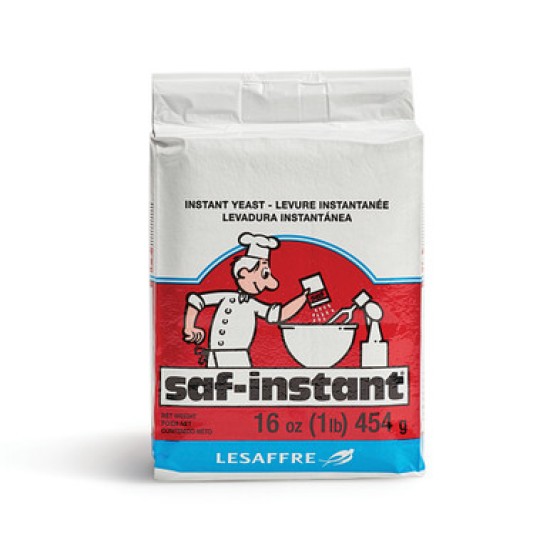
1/4 teaspoon instant yeast
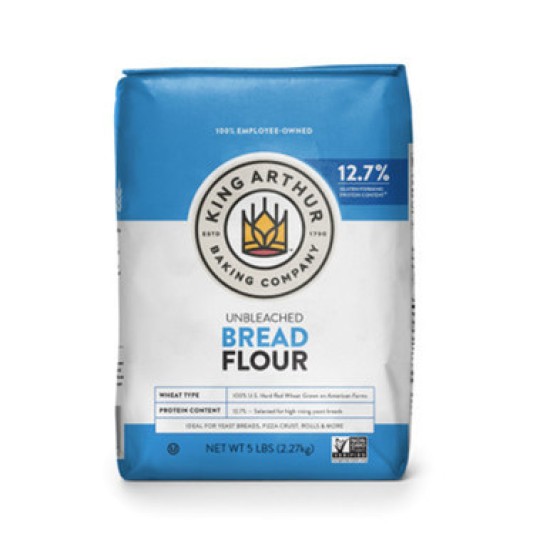
1 1/4 cups King Arthur Unbleached Special Bread Flour
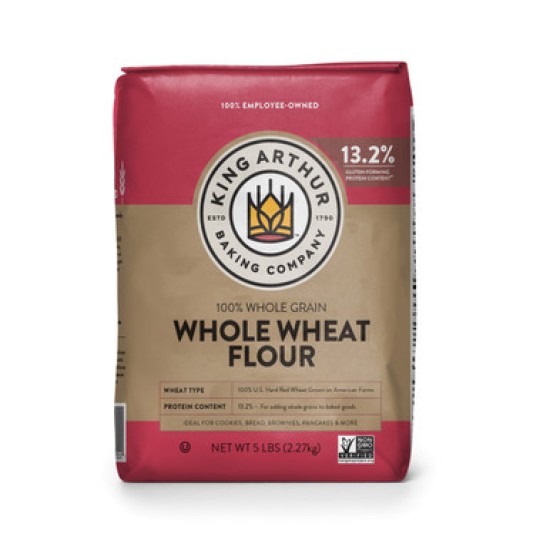
2 tablespoons King Arthur Traditional Whole Wheat Flour
1 tablespoon yellow cornmeal
1 tablespoon semolina flour

The Dough
1 cup water, chlorine-free
1 tablespoon kosher salt
1 tablespoon granulated sugar
1/4 teaspoon instant yeast
3 1/2 cups King Arthur Unbleached Special Bread Flour

The next day (or about 8 hours later) stir down the sponge. Continue to make the dough. Program your machine for Manual or Dough, and press Start. As the dough begins to mix it should form first a soft mass, then eventually a soft ball that is not too stiff, but not sticky, either. Adjust with additional flour or water as necessary. (If the dough isn't coming together, stop the machine, and stir the dough with a rubber spatula to help the sponge and added ingredients combine. Re-program the machine for Dough, and start it again.)

When the cycle is complete, remove the dough from the machine. (It can hang around for a bit -- you don't have to rush.) Cover with a tea towel and let rest for 30 minutes. (If you want to leave the dough all day, place it in a lightly greased bowl, cover the bowl, and refrigerate it. When you're ready to work with it, deflate if necessary, and allow to warm slightly before proceeding.)

After its rest period, deflate the dough gently and form it into a round ball, Place the ball, seam-side-down, on a cornmeal-dusted baking sheet. Cover it lightly with a tea towel. Let it rise a second time until it's puffy and about 30% to 40% larger, about 1 hour. Don't let it rise too much, since it rises some more in the oven and, if it's overproofed initially, it'll collapse as it bakes.

Preheat the oven to 475°F. Make several 1/4- to 1/2-inch slashes or crosshatches in the loaf. If your dough deflates at this point, it means it rose too much. But even if it does topple a bit or deflate, generally the heat of the oven will help it spring back.

Using a clean plant mister, spritz the loaf with water. Spray some water into the oven, and place the bread on the lowest rack.

Spritz the oven walls every few minutes for the first 15 minutes of baking. Lower the heat to 425°F (this reduction in heat mimics the "falling oven" used by brick-oven bakers, and will give your bread an incredible crust), and continue to bake until well-browned, about 35 minutes. The interior temperature of the bread should register 190°F on an instant-read thermometer. Remove the bread from the oven, and cool it on a wire rack before slicing. Store, cut side down, on a counter (do not cover). Yes, this really works; your bread will remain fresh but not soggy for several days. Yield: One large loaf, about 24 hearty servings.

Additional Notes:
You may use 2 tablespoons pumpernickel, the grain French bakers traditionally add to enhance a bread's keeping qualities, in place of the whole wheat flour in the initial sponge.

For an even chewier bread with larger, more irregular holes, try increasing the amount of water in the dough's second stage by 1/4 to 1/2 cup. Add 1/4 cup initially, then take a look at the dough while it's in its second kneading cycle. Your goal is to create a dough which is very wet and slack, but which will still hold its shape when formed into a freeform loaf. Add additional water if it looks as though the dough can absorb it and still remain firm enough to be workable.

This bread is an ideal candidate for a linen-lined banneton, which will hold and shape it as it rises and, because of the moisture-drawing qualities of the linen, help produce a chewy crust.

Try putting your risen loaf into the oven without slashing it first; it'll develop its own natural split, producing a more rustic-looking loaf.

For a thick, brown, chewy bottom crust, try baking the bread in the oven in a preheated cast iron skillet, or on a baking stone.

For a crisper crust, allow the loaf to cool in the oven. When the bread is done, turn off the oven and crack the door open a couple of inches, leaving the loaf inside.

Just a Hint....
Store crusty hearth loaves uncovered, but with their cut side down on the counter. This is one of the best tips we've come across in some time. Though this doesn't work on baguettes, rolls, or other small loaves, it works beautifully on big boules or freeform loaves. The moisture in the bread's interior gradually migrates to the surface, but since the cut side is covered, it can't escape there; instead, it must navigate its way through the thick crust, a much slower process. This keeps the bread's interior soft, and the crust hard and crunchy.

Nutrition information per serving (1 slice, 1/24 of loaf, 47g): 87 cal, .2g fat, 3g protein, 18g complex carbohydrates, 1g sugar, 1g dietary fiber, 267mg sodium, 38mg potassium, 2RE vitamin A, 1mg iron, 42mg calcium, 27mg phosphorus.

Reviews

Page:   1  
*****

02/27/2010

Bonnie from wv

This bread is great. I am cooking this in the winter, so I make sure to add a little bit more water and the texture is incredible. We make the most incredible tuna melts with thin slices of this bread. Probably my favorite bread on this site

*****

01/29/2010

AT from Arkansas

I love love love this recipe. I began my yeast baking adventure about 6 months ago and I can't say how helpful this site is. This is my favorite bread to make for any occasion. I forgot my starter over the weekend once and used it to see what would happen and I was rewarded with an even more complex and delicious loaf. Wonderful recipe!

*****

01/25/2010

Warren from Lakewood, Co

I have made this recipe a number of times. I like it a lot. Lately I have changed it somewhat be upping the whole wheat, using brown sugar and adding some 5-grain cereal for texture and body. I mix it up in an Electrolux Assistent mixer and bake in conventional oven.

*****

01/04/2010

rainey from Los Angeles

I have been using this recipe for possibly 5 years now. It is my go-to recipe because it's always reliably delicious with that exceptional flavor that only a pre-ferment makes possible. I now bake this in a preheated ceramic tagine in the method Jim Lahey described for his no-knead bread.

*****

12/30/2009

John Wayne from Austin, Texas

While this recipe seems to be a good one, why is it presented for use with a bread-making machine? Doesn't anyone knead bread the old fashioned way anymore? I would have thought that a website representing so great a flour as King Arthur would provide recipies that wouldn't need a machine. Come on King Arthur... cowboy up!
It is presented as a bread machine recipe Iitalian and French breads on the site, you will find many many that are not bread machine recipes.Mary@KAF

*****

01/03/2009

AG from Virginia

This recipe was exactly as described. The bread was nice and crusty and delicious. I made it for some freinds who said when they ate it and all they could do was sit there and grunt with delight.

Page:   1