Scali Bread
This shiny, mahogany-brown braid is heavily coated with sesame seeds, giving it nutty flavor and a lovely appearance. Serve it with your pasta, or slice it for sandwiches; it’s a fixture of Boston-area bakeries and supermarkets. P.S. Step-by-step photos illustrating how to make scali bread are available at Bakers’ Banter, our King Arthur blog.
Starter
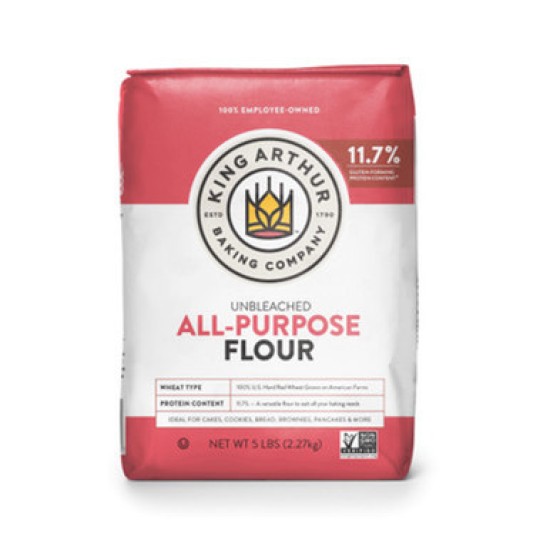
1 cup (4 1/4 ounces) King Arthur Unbleached All-Purpose Flour
1/3 cup (2 5/8 ounces) cool water
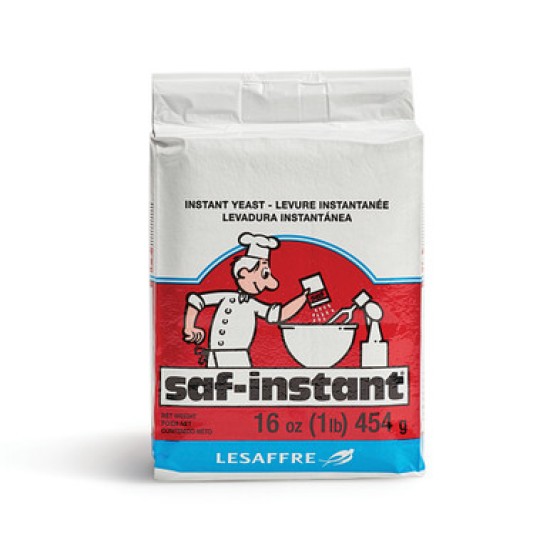
pinch of instant yeast
Mix together, cover, and let rest at room temperature overnight.
Dough
all of the starter
2 cups (8 1/2 ounces) King Arthur Unbleached All-Purpose Flour
1 1/4 teaspoons salt
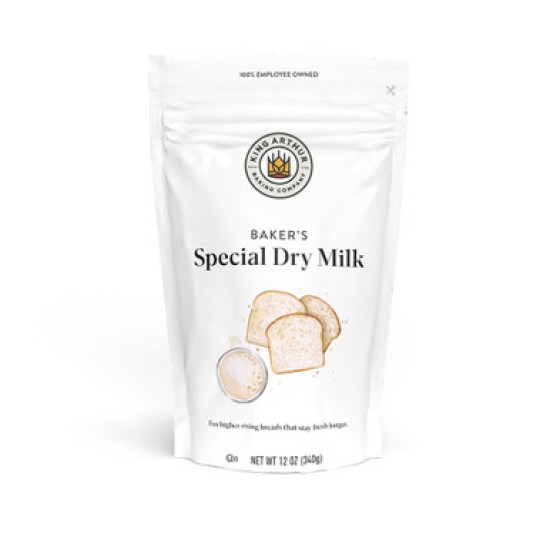
2 tablespoons (3/8 ounce) Baker’s Special dry milk or nonfat dry milk
2 teaspoons instant yeast
2/3 cup (5 1/4 ounces) lukewarm water
2 tablespoons (7/8 ounce) olive oil
Topping
1/2 cup (2 1/4 ounces) sesame seeds
1 large egg white beaten with 1 tablespoon cold water
To make the starter: Mix the 1 cup flour, 1/3 cup water, and yeast in a medium-sized bowl. Cover, and set aside to rest and rise overnight.
To make the dough: Combine the starter with the remaining dough ingredients, and mix and knead—by hand, mixer, or bread machine set on the dough cycle—to make a soft, smooth dough. Place the dough in a lightly greased bowl, cover, and let it rise for about 90 minutes, till it's just about doubled in bulk.
Gently deflate the dough, and divide it into three equal pieces. Shape each piece into a rough log, and let the logs rest, uncovered, for about 10 minutes. This gives the gluten in the dough a chance to relax, which in turn will make the logs easier to roll.
Working on a lightly greased surface, roll each log into a rope about 24" long. Brush each rope with the egg white/water, and sprinkle heavily with the sesame seeds, rolling the ropes gently in the seeds to pick up as many as possible. Grab one end of each rope, and squeeze the ends together firmly. Braid the ropes, tucking the ends under to make a neat braided loaf. Cover the braid with lightly greased plastic wrap, and allow it to rise till it’s very puffy, about 90 minutes. Towards the end of the rising time, preheat the oven to 425°F.
Bake the braid for about 25 to 35 minutes, till it’s a deep golden brown. Remove it from the oven, and cool on a rack.
Yield: one large loaf.
Reviews
01/01/2009
I was so excited to find this recipe. I am a very good bread baker, even sell my breads at times. But this recipe was a disaster. First, the starter needed more water 1/3 C was not enough to even moisten all the flour. The dough came out of the bread machine way to wet, so I worked it with a little flour, but it was still too wet to braid. Didn't rise well after I put it on the parchment and pan. Came out flat when baked and stuck to the parchment. I am going to try this recipe one more time, but use 3 c in the dough recipe rather than 2. Will update this if it turns out better.
Sorry this didn't work well for you. Yes, the starter is dry, compared to most. But the final hydration, around 75%, is very typical of a medium-texture yeast dough - so not sure why your dough was so wet. The reason it rose outward and flattened, instead of rising up, was the fact that the dough was wet, as you said. I hope you gave this another try and had more success! I make this frequently, and it's really one of my favorite breads. - PJ Hamel, King Arthur Flour test baker
02/06/2009
This recipe is great, I have made it a number of times with success.
02/21/2009
Susan is right in saying that the starter seems overly dry, but I followed the directions exactly and it all turned out wonderfully. This was my first time braiding a bread, and this dough was very easy to work with - elastic but firm and not at all gooey. Most importantly, my family and I loved the texture of the finished loaf - chewy but tender, with good bakery flavor.
I've personally found with all the KAF recipes/directions that even when something doesn't really seem right, it is. I trust in you folks and sure enough, I have had success with every single one of your recipes I've tried (and that's a lot!).
Jennifer - Thank you very much for that strong vote of confidence! Not ALL of our recipes are error free. That is why these reviews are so helpful. We love to hear from our customers. Elisabeth @ KAF
03/28/2009
Unfortunately, I've had the same result with the starter. It's so dry that it doesn't even absorb all the flour, let alone rise. I'm trying my third (and final if it fails!) batch of starter tonight, but I used much closer to1/2 cup water, so we shall see...
Although this is a stiff starter you want all the flour to be absorbed. And when you make you final dough you want your dough to be soft and smooth. If you are still having problems please call our hot line to help you. Joan@bakershotline
07/02/2009
Delicious bread. I have also made it using a biga made from my natural levain! Wonderful and added a little extra chew and flavor!
07/02/2009
I haven't made this yet, but I think the problem with the dry starter might be that the flour was packed too tightly before measuring. What is the recommended weight of the flour in the starter?
Bettie - The weight for 1c. of all purpose flour should be 1 1/4 oz. Elisabeth @ KAF>/b>
07/21/2009
I beleive the correct weight for 1 cup of flour is 4 1/4 oz not 1 1/4 oz. The starter worked perfect for me, I have a batch ready to go tonight when I get home.
09/20/2009
Ok, better late than never. I made and rated this recipe back in January and was a bit harsh, I apologize. I just made it again today and I was more careful to incorporate the flour into the water while making the starter. The loaf came out very nice. I wanted to post a photo of my loaf but do not see where I can do that? Thank you KAF for tolerating an impatient ninny.
Susan, Thanks for giving this loaf a second try. I am glad you enjoyed it. Although you can not post a pic with your review, we'd appreciate taking alook at your work. You can attach it and send it to us directly: bakers@kingarthurflour.com.Frank @ KAF.

Bookmark/share
this recipe