Sourdough.
Whether it conjures up a crusty, flavorful loaf of bread or a bubbling crock of flour/water starter, sourdough is a treasured part of many bakers’ kitchens.
But where does the path to sourdough bread begin? And how do you start?
Start in your own home kitchen. And begin by creating your own sourdough starter.
First, a word of advice. Sourdough baking is as much art as science. This method for making sourdough starter isn’t an exact match for the one you read on another site, or in a cookbook, or in your great-grandma’s diary.
If you have a process you’ve successfully followed before, then hey, stick with it. Or try this one and compare. All good.
OK, ready? Let’s go.

Did you know that by clicking anywhere on this block of pictures, you can enlarge them to full size? Go ahead, give it a try; it'll work for any of our gridded photos.
The following timeline assumes you can find a relatively warm place (68°F to 70°F) to grow your starter. More on that below.
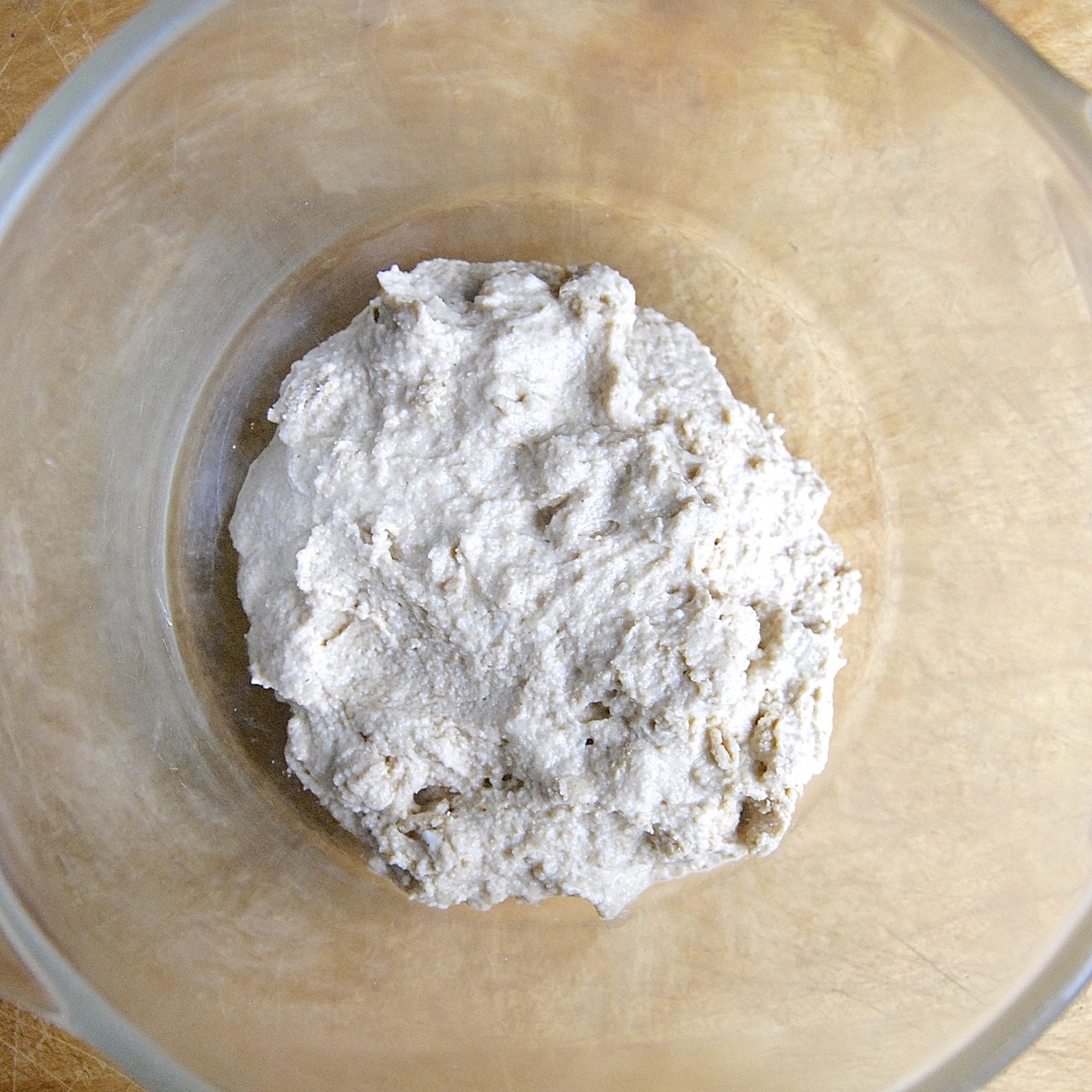
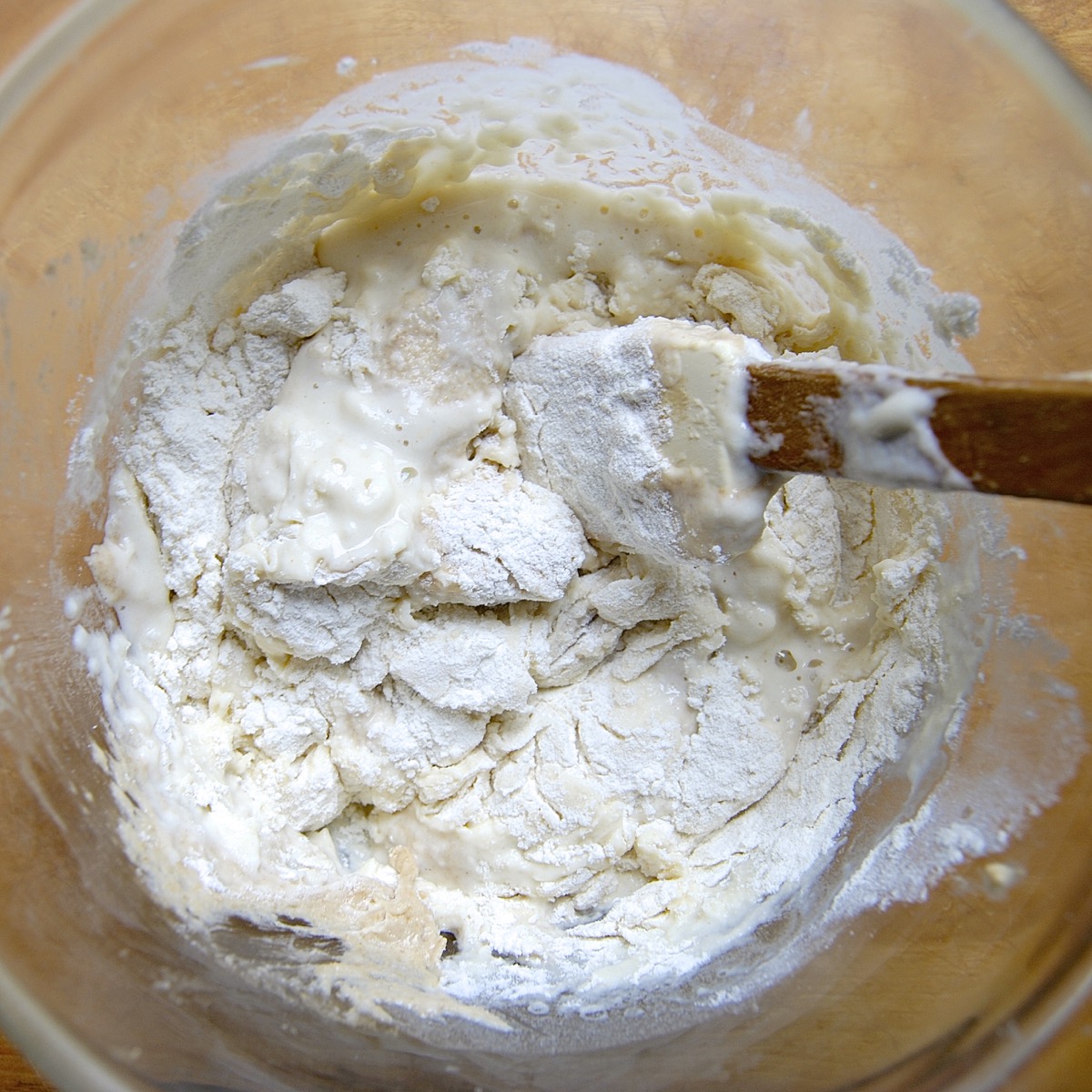
Day 1: Combine 4 ounces (1 cup) whole rye flour (pumpernickel) or whole wheat flour with 4 ounces (1/2 cup) non-chlorinated cool water in a non-reactive container. Glass, crockery, stainless steel, or food-grade plastic all work fine for this. Here, I’m using a 4-cup glass measure.
Note that whole grain flour (whole wheat or rye) is used at the beginning of the process. This is because whole grains contain more nutrients and sourdough-friendly microorganisms than all-purpose flour.
It’s also important to feed your starter with non-chlorinated cool water; from now on, we’ll refer to this simply as “water.”
Stir everything together thoroughly; make sure there’s no dry flour anywhere. Cover the container loosely and let the mixture sit at warm room temperature (about 70°F) for 24 hours.
A note about room temperature: the colder the environment, the more slowly your starter will grow. If the normal temperature in your home is below 68°F, we suggest finding a smaller, warmer spot to develop your starter.
For instance, try setting the starter atop your water heater, refrigerator, or another appliance that might generate ambient heat. Or, set it near a heat source (baseboard heater, etc.).
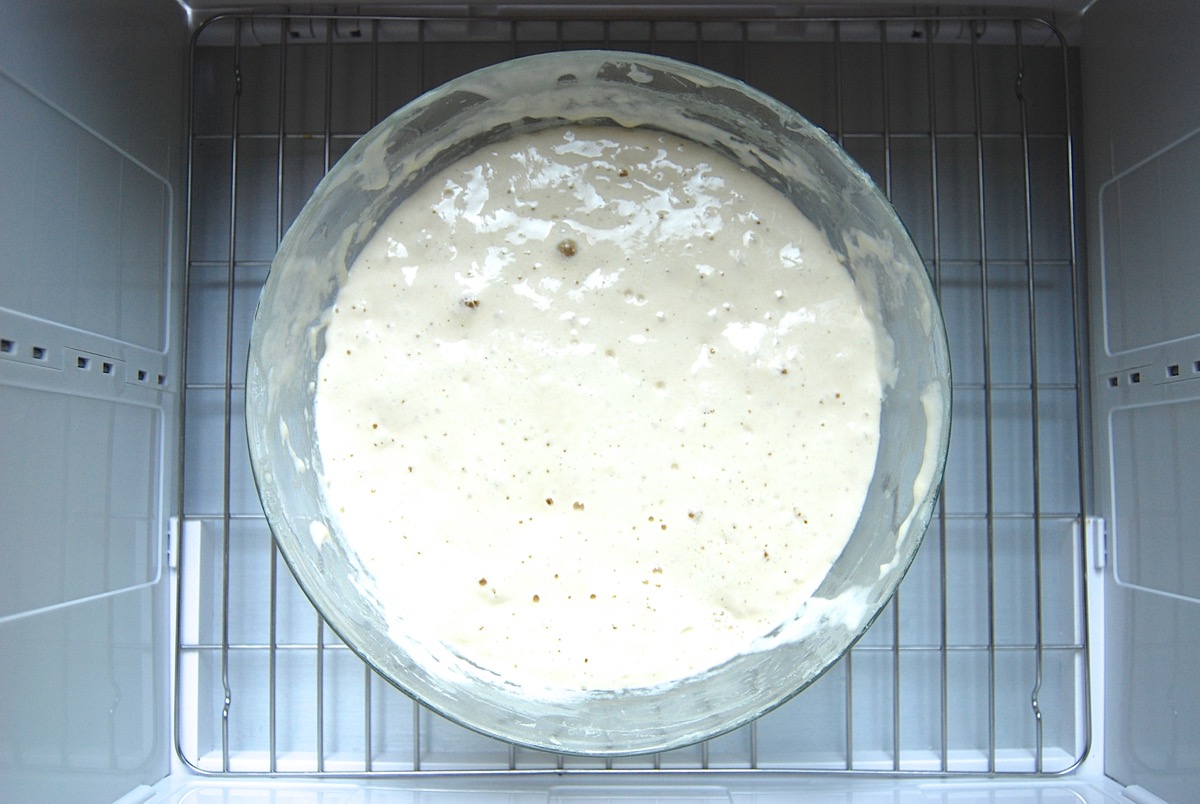
Another option: set the container of starter on a folded dish towel laid atop a heating pad on its lowest setting – as I’ve done in the photo above.
A temperature-controlled bread proofer is the absolute ideal solution; if you bake lots of yeast bread, you might consider investing in one of these tools.
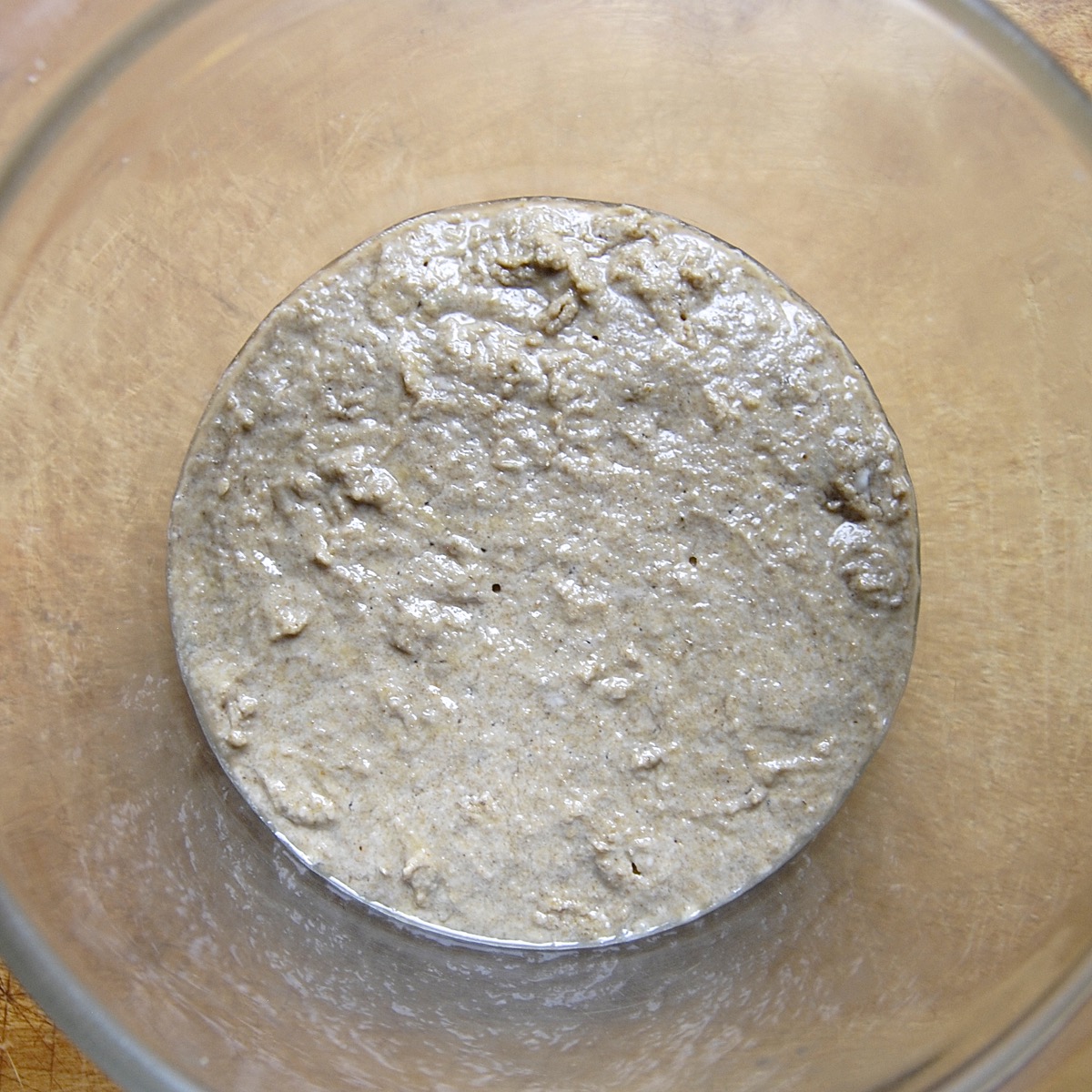
Day 2: You may see no activity at all in the first 24 hours, or you may see a bit of growth or bubbling.
Either way, discard half the starter (4 ounces), and add to the remainder 4 ounces (a scant 1 cup) King Arthur Unbleached All-Purpose Flour, and 4 ounces (1/2 cup) cool water (if your house is warm); or lukewarm water (if it’s cold).
Mix well, cover, and let the mixture rest at room temperature for 24 hours.
Note: Why do you need to discard half the starter? It seems so wasteful…
Well, it’s necessary for three reasons. First, unless you discard, eventually you’ll end up with The Sourdough That Ate Milwaukee – too much starter. Second, keeping the starter volume the same helps balance the pH. And third, keeping the volume down offers the yeast more food to eat each time you feed it; it’s not fighting with quite so many other little yeast cells to get enough to eat.
Also, you don’t have to discard it if you don’t want to; you can give it to a friend, or use it to bake. There are quite a few recipes on our site using “discard” starter, including sourdough pizza crust, sourdough pretzels, and my all-time favorite waffles.
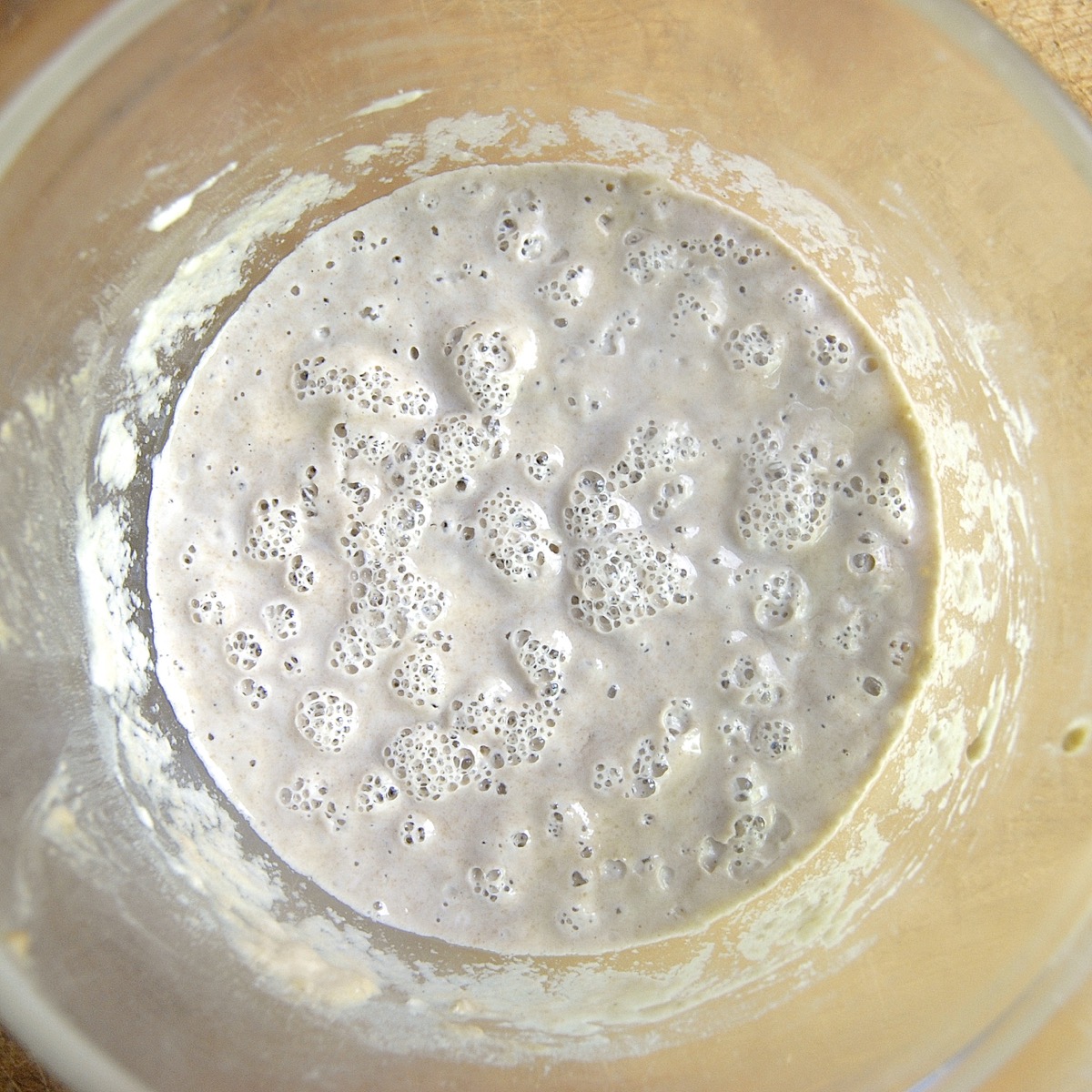
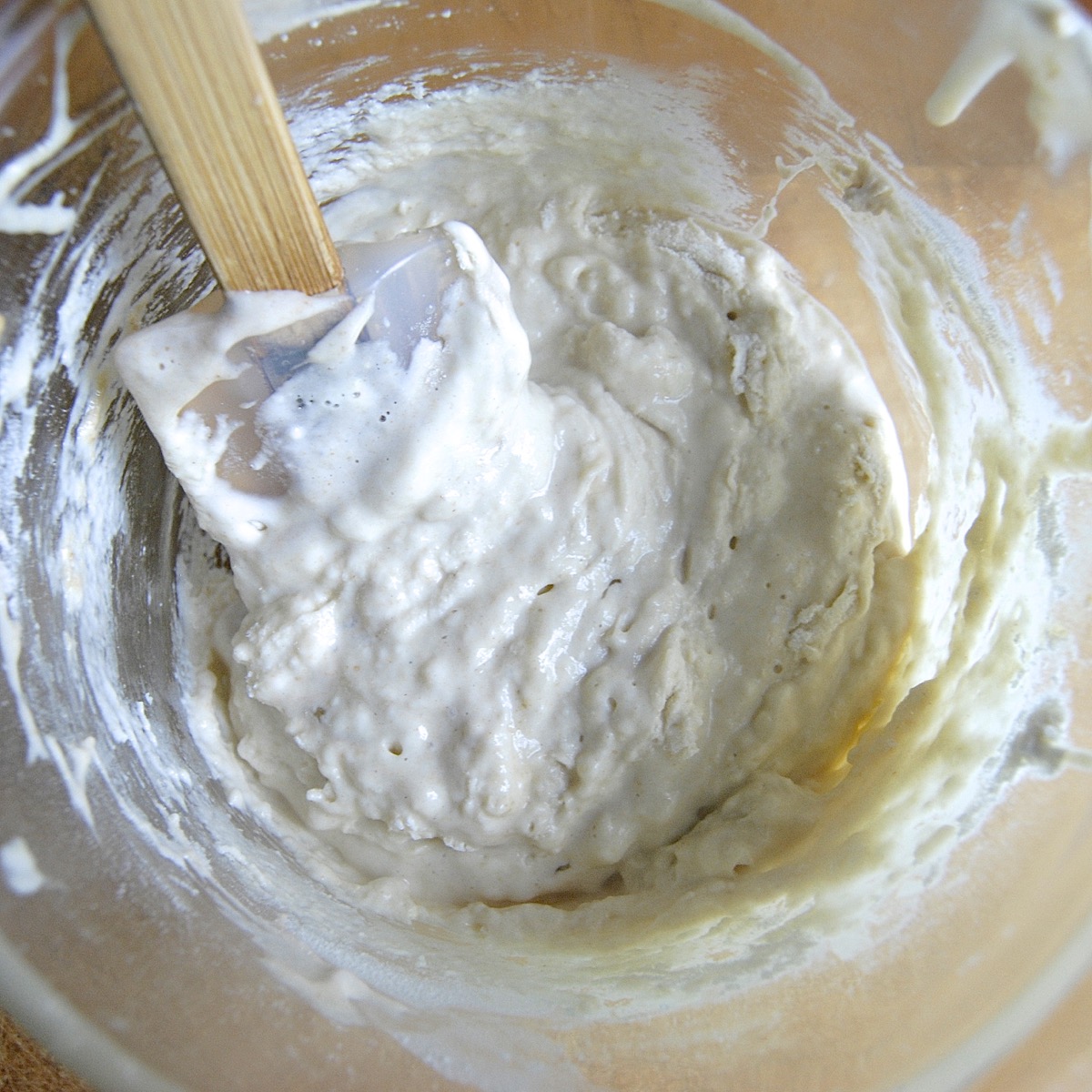
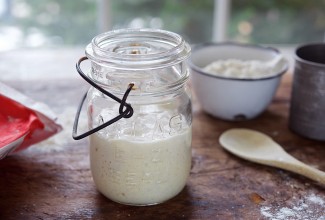
Days 3, 4, & 5: By the third day (pictured top left), you’ll likely see some activity – bubbling; a fresh, fruity aroma, and some evidence of expansion. It’s now time to begin two feedings daily, as evenly spaced as your schedule allows.
For each feeding, weigh out 4 ounces starter; this will be a generous ½ cup, once it’s thoroughly stirred down. Discard any remaining starter.
Add 4 ounces (a scant 1 cup) King Arthur Unbleached All-Purpose Flour, and 4 ounces (1/2 cup) water to the 4 ounces starter.
Mix the starter, flour, and water, cover, and let the mixture rest at room temperature for approximately 12 hours before repeating.
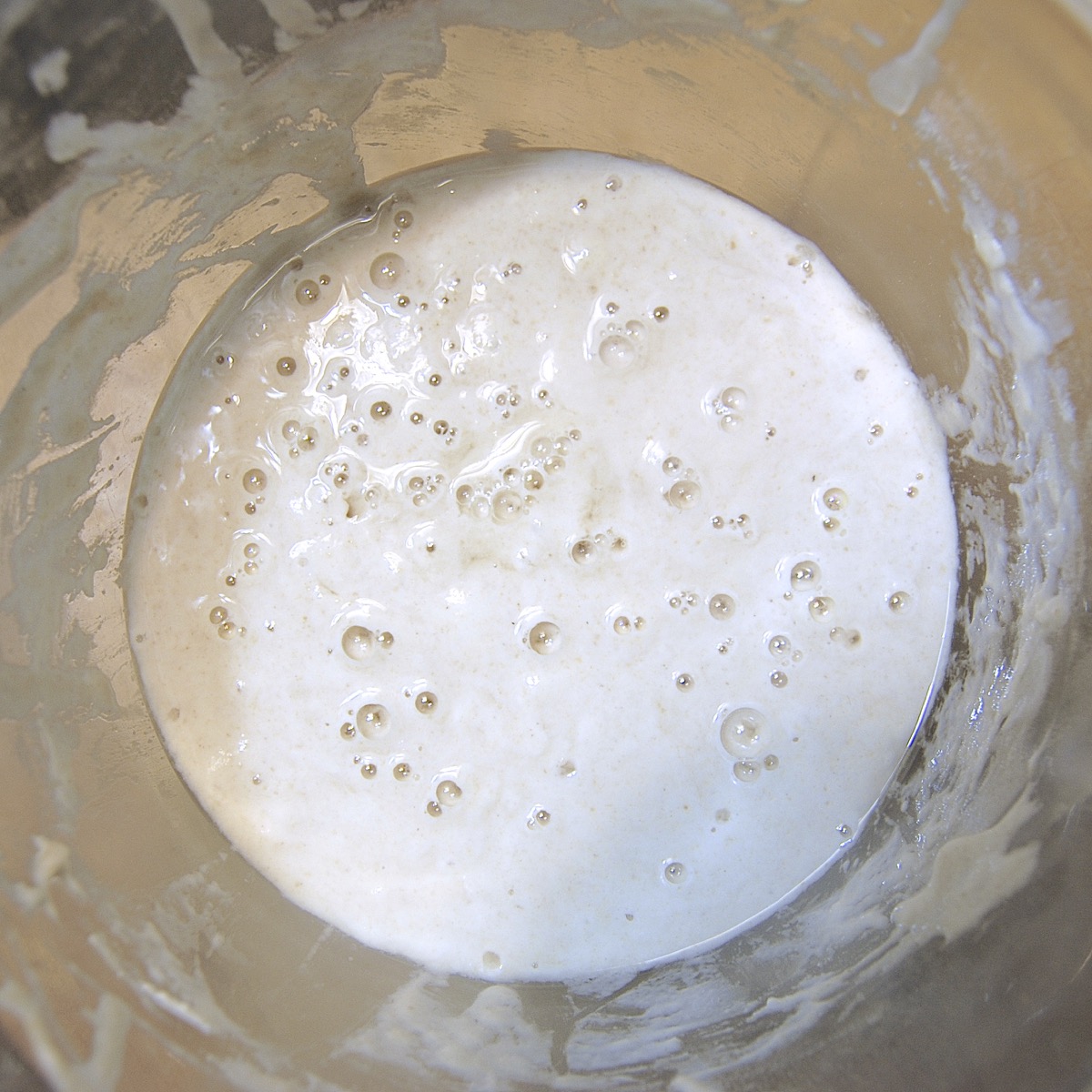
Repeat two-a-day feedings on days 4, 5, and as many days as it takes for your starter to become very active.
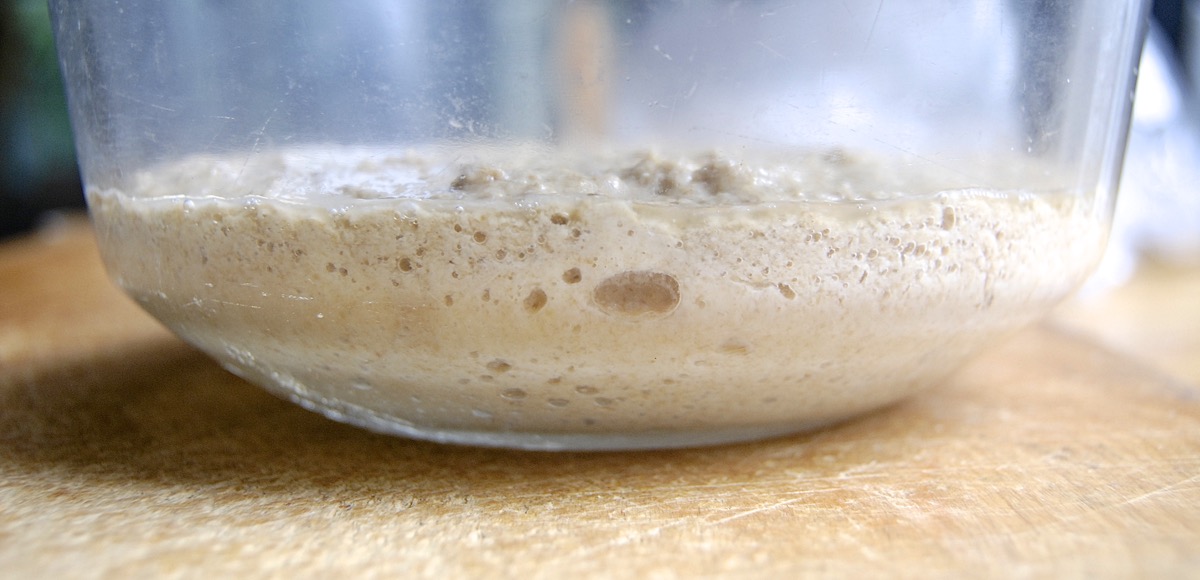
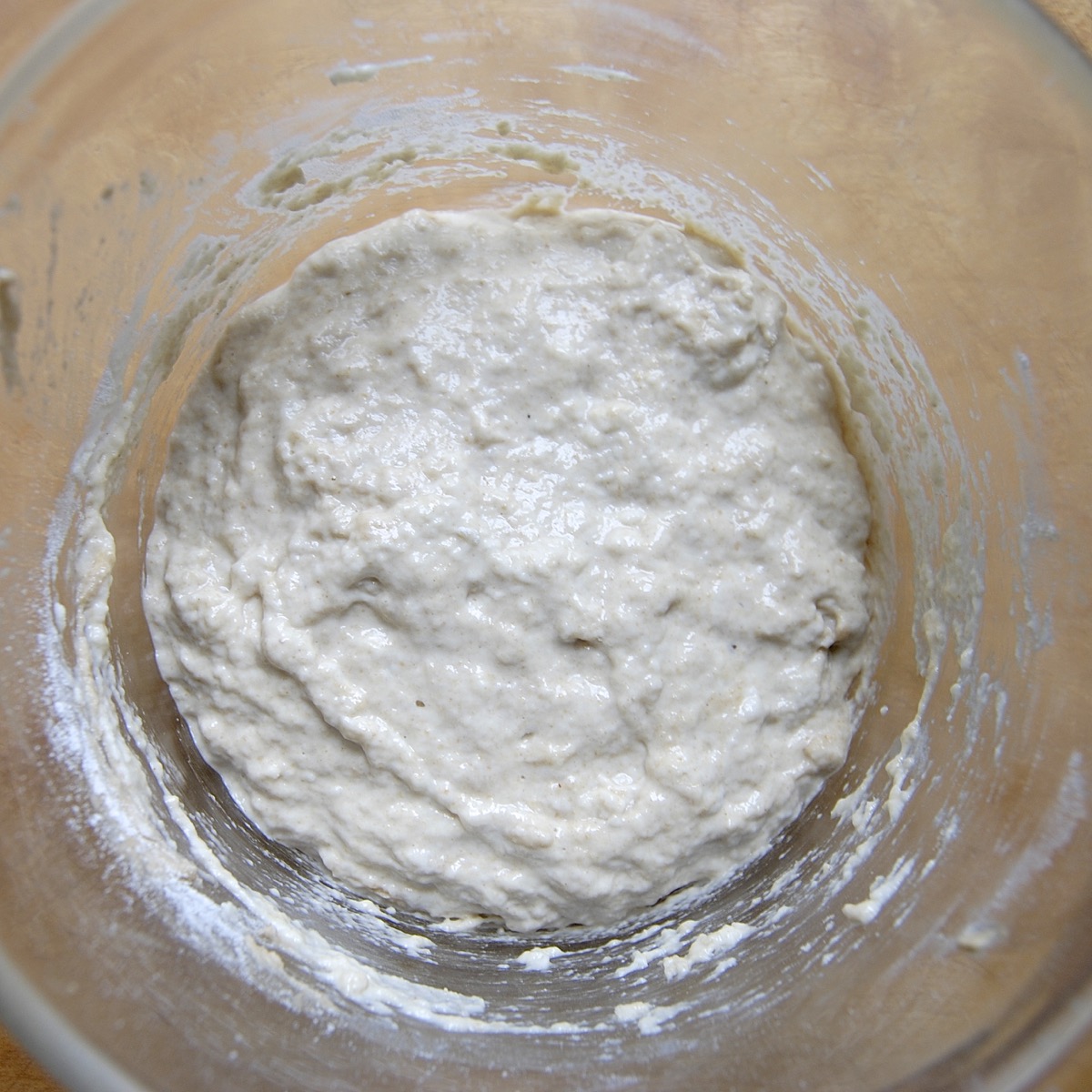
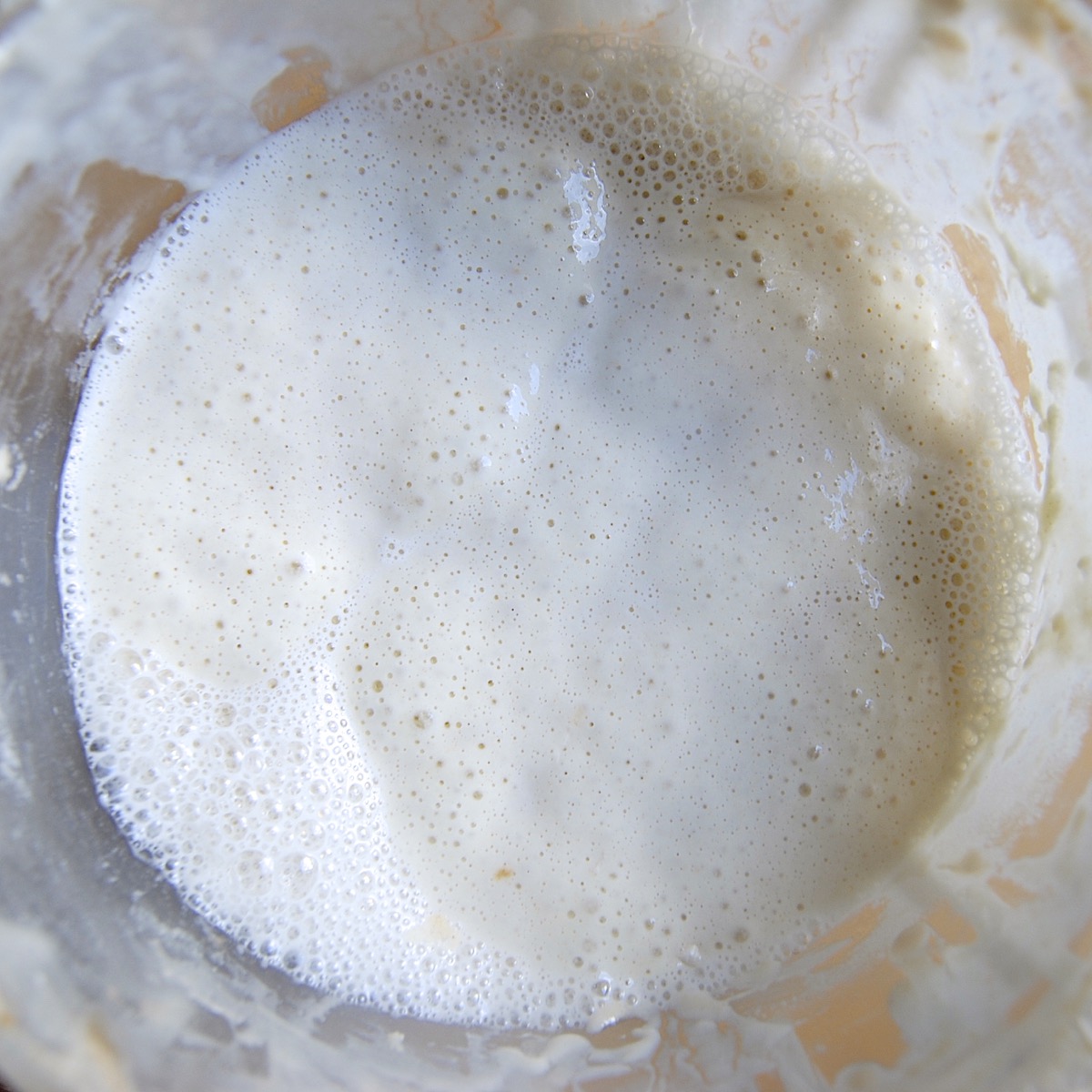
The photo at bottom left shows the starter 12 hours after it’s been fed on day 3. Pictured at bottom right is that same starter, 12 hours after feeding, on day 6 – see how vigorous it’s become?
After about a week of consistent feeding, your starter should be ready to use in a sourdough bread recipe.
How do you know when your starter is ready to use?
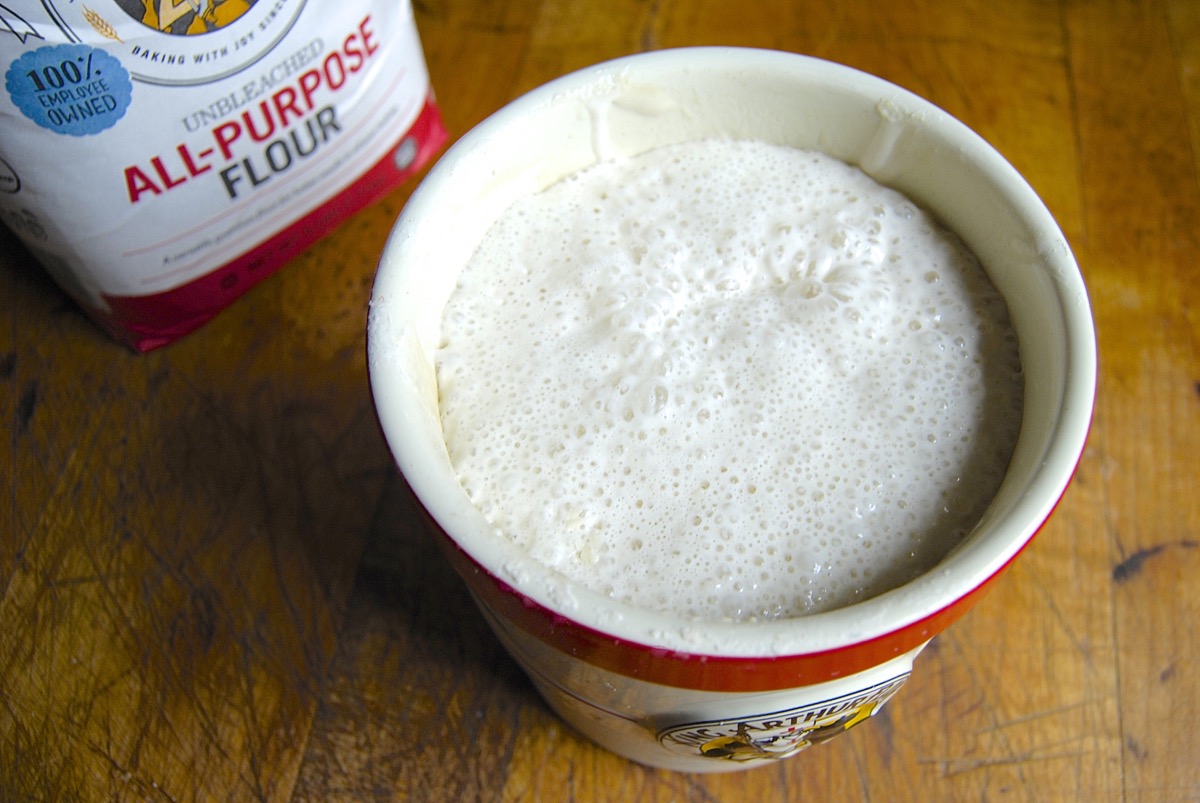
After 12 hours, the starter will have risen nicely. You’ll see lots of bubbles; there may be some little “rivulets” on the surface, full of finer bubbles.
Also, the starter should have a tangy aroma – pleasingly acidic, but not overpowering.
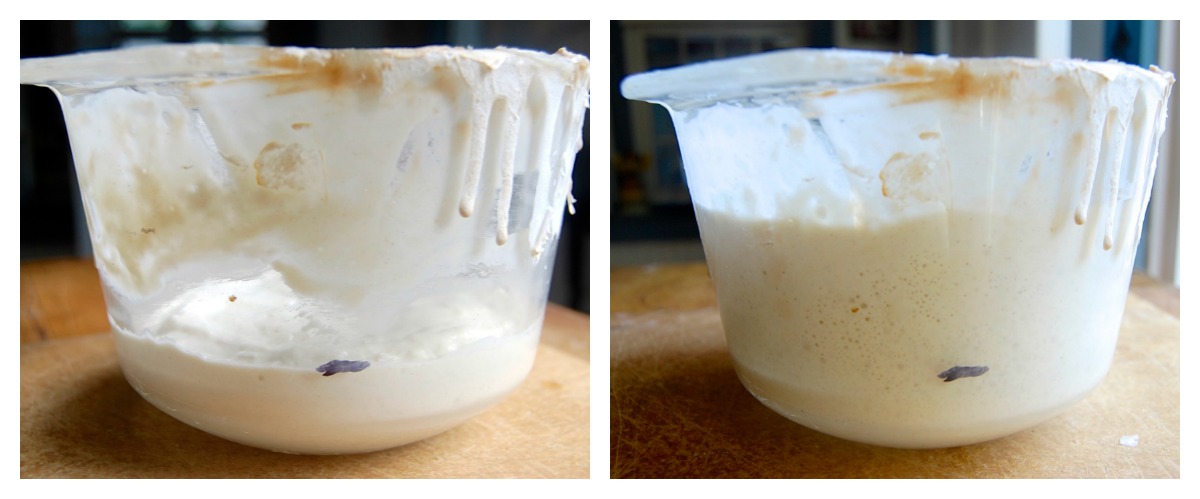
The starter should at least double in volume 12 hours after it’s been fed; in the pictures above, it’s taken about 4 hours to double; so this starter is ready.
Here’s our starter, 1 week after we began the process: I’d say that’s good to go.
Once the starter is ready, give it one last feeding. Pour off all but 4 ounces. Feed as usual. Let the starter rest at room temperature for 6 to 8 hours; it should be active, with bubbles breaking the surface.
Remove however much starter you need for your recipe (no more than 8 ounces, about 1 cup); and transfer the remaining 4 ounces of starter to its permanent home: a crock, jar, or whatever you’d like to store it in long-term.
Ah, success…
But wait – what if things haven’t gone exactly according to schedule?

No worries. If, after a week, your starter isn’t ready, don’t lose heart; keep feeding it regularly, and it will gain strength – really!
Be patient. The conditions in your kitchen may be more or less conducive to building a starter, depending on room temperature, the season, humidity, or how much you’ve been baking.
Remember, the keys to developing a successful starter are using good (unbleached) flour; having a consistent feeding schedule, and ripening (growing) the starter in an environment that’s adequately warm (at least 68°F, and preferably in the 70s).
When your starter is strong enough, it’s time to go ahead and make your favorite sourdough bread.
Once your starter has been fed, and you’re ready to mix up your bread dough, you’ll want to reserve and maintain a small portion of the ripe (fed) starter (about 4 ounces; about 1/2 cup, stirred down) for future baking. Unless you plan on continuing to feed the starter twice a day, refrigerate it for future use.
Good luck! And enjoy.


April 5th, 2012 at 6:17 am
How does one find that water? Any help on that would be appreciated. Thanks!
Any bottled water is fine – any grocery, convenience store, or supermarket would carry it. Good luck! PJH
April 5th, 2012 at 8:54 am
Why do you discard all but 4 oz of starter every time you feed the starter? Is that you prevent you form having a huge bowl of starter, or is there a “bread science” reason?
Yes, to prevent you from ending up with too much starter; but most of all, to concentrate the yeast/lactobacilli in a smaller amount of space, so it can grow more quickly – not as much competition for the available food. PJH
April 5th, 2012 at 9:59 am
I tried to find an answer before asking but my searches just gave me more recipes. I’m wondering why you have to discard so much of the starter as you feed it and it grows? Why not use what would be thrown out for a second starter? Or would that be too much?
All this effort and time for something so delicious, I guess this is why a good (though small) loaf of sourdough bread at the local grocery store costs over $5 (!!).
The discard is to keep the ph of the starter in balance. you may use the discard to begin a second starter, or gift a baking friend, or use it for sourdough pancakes: Recipe here.
Frank @ KAF.
April 5th, 2012 at 11:03 am
This is wonderful information. I have always been interested in sourdough breads, and last week I got some of the KAF starter. I’ve just been following the instructions step by step that came with the starter, and so far, everything seems to be working. This is information in this blog, however, answers a lot of my questions about it. The reason I’m writing is to say that, wow, the rustic bread that I made is amazing (and all gone, I might add!). It’s the best bread I’ve ever made. And so easy to make. We’re planning to live on it now. Who needs anything else! The flavor and texture are way beyond my expectations. I’m trying to make a lot of it this week because I have a lot of company for the holiday. So far, so good. Thank you, KAF.
April 5th, 2012 at 3:05 pm
This is so happening this weekend!
You go, girl!! I know your good karma will produce a fabulous, strong starter and wonderful bread. Stay tuned for our next blogs: maintaining your starter, and a wonderful recipe for sourdough bread with no added yeast… Happy Easter – PJH
April 5th, 2012 at 5:01 pm
I only argue that sometimes, you can get a starter that is just completely retarded in its growth.
I had one that you could feed as many times as you wanted and keep in a nice warm spot, but it would take weeks to double in volume even once.
I finally gave up on that one.
I do have one that was made almost exactly like these instructions that it really is trying to be the starter who ate the world. I gave a small spoonful to a friend and it tried to eat her fridge the next day. But it makes wonderful sourdough pancakes.
Sourdough is so quirky – well, its just like us, a living, unpredictable entity! And some sourdoughs, as you say, have real personalities – I guess that’s why we name them. Enjoy – PJH
April 5th, 2012 at 11:22 pm
You guys must be psychic, I’ve been trying to make a starter for the past week with your flour…
Alun, hopefully the photos will help. It can be tricky; I was having trouble until I broke out the heating pad. 60°F is just too cool to get anything going very quickly. Good luck! PJH
April 6th, 2012 at 5:58 am
If you’ve fed your starter with equal parts flour and water by weight, it’s easy to substitute the part of the starter that would be thrown out before feeding for part of the ingredients in any recipe that calls for yeast. Just use the weight recipe amounts rather than the volume amounts. If you are “throwing out” (stirring into a recipe) four ounces of unfed starter, subtract two ounces of liquid and two ounces of flour from the recipe amounts to be added. You may need to cut back on the yeast a little, too. I do this with yeast recipes routinely, since I couldn’t possibly discard my much-loved starter. Also, we filter our water with a Brita carafe and that eliminates the chlorine.
Great tip – I often use the “discard” in bread, just as you say. Also use it in any recipe calling for flour/liquid, where the liquid can be water; I sometimes use it in cake, pancakes, muffins… PJH
April 6th, 2012 at 9:39 am
How do you know the ph levels in your starter? Is it about smell, taste, or growth rate, or what? Also, I have a thing against all-purpose flour. I grind my own wheat and usually have 3-5 types of berries on hand. What are your thoughts on using freshly ground white-wheat or hard red winter wheat or even soft red spring wheat instead of AP white? I know rye behaves differently, so right now I am building a rye starter using only whole rye flour, but I wonder about adding some rye to my basic starter. Your instructions for the starter for sale on your website says to add twice as much flour as water each time you feed it. Why is the ratio different than this “create-your-own” version? And finally, no matter how I cover my starters, my regular one (bought on your website) always develops a “crust” on top. My rye one never does. I usually just stir this back in when I am feeding it and it dissolves just fine. Is the crust thing normal? Thanks!
I don’t test the pH levels in my starter (though it IS possible to get test strips from scientific supply companies)… Let me answer your questions in order here-
1) Making starter from freshly ground wheat. You can do this, but run a fairly significant risk of it eventually going bad. Jeff Hamelman, one of our SD gurus, says he’ll use some whole grain to start a starter, but then switches over to feeding it with AP. If you do want to feed it with whole grains, it’s fine – but don’t leave it out on the counter, it’ll have to live, long-term, in the fridge.
2) The instructions for adding twice as much flour as water refer to volume – you feed with 1 cup flour and 1/2 cup water. By weight, they’re the same – about 4 ounces.
3) Not sure about the crust – mine never develops a crust, but instead ends up with liquid on top. Are you keeping it at room temperature, or in the fridge? Maybe it’s not covered well enough? Maybe you live in a particularly dry climate? But whatever, just stirring it back in, as you do, is fine. Good luck- PJH
April 6th, 2012 at 10:32 am
Great info as usual:)
I have also read, in Leader and Blahnik’s “Bread Alone”,
that the more natural (less urban)an environment,
the more likely you are to be able to capture the wild yeast.
And that having a bunch of organic grapes sitting near your starter never hurts
evidently they harbor wild yeast.
If you are in a rural area there are even more wild yeasts to capture, but right now they are being over run by the pollen!
Actually, studies seem to show that most of the wild yeast comes from the flour you use, not your surroundings; so you don’t really need to worry too much about being in an urban environment, finding wild grapes, etc. (though the wild grapes are a nice touch, and certainly wouldn’t hurt, as you say). Hope you’re not enduring hay fever with all that pollen around! PJH
April 6th, 2012 at 10:33 am
I must be doing something wrong. I have the starter in the crock, the rim is not as nearly as clean as in your pictures. I never throw anything out! I just feed (and let sit for 1 -2 hours depending on my schedule) and then use 16 oz for the Sour dough rye bread from your website. Feed again to make up for the double amount of taking out. It is not really sour, I would like it to have more pronounced sour flavor, on the other hand my family loves it this way. How can I get my rim to look cleaner? Take everything out, wash the crock and then put it back?
Erie, yes, to get a clean rim, take the starter out, wash the crock, and return the starter. BTW, the crustiness on top isn’t hurting anything, as far as your starter is concerned; but if you don’t like it, feel free to give the crock a good going-over periodically. For more sour bread, try letting the shaped loaves rest overnight in the fridge. Oftentimes, the sourness of the bread isn’t contingent on the sourness of the starter so much as how you handle the dough; dough that’s chilled will allow the yeast to give off more acetic acid, which is more sour (think vinegar). If all else fails – try adding 1/8 to 1/4 teaspoon sour salt (citric acid) to the dough, which totally ramps up the sour flavor. PJH
April 6th, 2012 at 10:44 am
PJ – just in time! My husband and I are moving into our new home this weekend (finally!!!!) and the kitchen is so much bigger than the one in our apartment (you’d think that kitchens in houses are bigger than the kitchens in apartments but you’d be wrong – one of the homes we looked at had a kitchen the size of my laundry room. We left quickly.). I’ve been wanting to try out a sourdough starter for months now but knowing we’d be moving, I decided to wait. I really appreciate all the ideas and extras from not only you but in the comments as well. I hate wasting food so the thought of simply throwing away the starter was a bit of a drawback for me. Thanks again for all the help and hints!!
Well, welcome to your new home – wish I was there to bring you a loaf of bread and some salt, which is a traditional way to welcome someone to a new home (in Eastern Europe). Anyway, the very best of luck with your starter – have fun! PJH
April 6th, 2012 at 11:35 am
PJ thanks for the great article. You mention in a comment that you use the discard in recipes that call for flour/liquid. I know it depends on how thick or thin you keep you starter, but do you have a rule of thumb for how much you would use to substitute water and flour in a recipe? I.e., if a recipe calls for a cup of water, could I substitute a 1/2C of unfed starter?
J.J., I figure starter is just about half liquid and half flour by weight; I realize as it ages the liquid starts to creep up, percentage-wise, but it’s usually not critical enough that I worry about it too much when adding starter to a recipe. So, for any recipe using flour and water, you could use 1 cup of starter – which would be 4 ounces water (probably more like 5 ounces), and 2 ounces flour. Reduce the flour and water in your recipe by those amounts if you want to sub the starter. Does that make sense? PJH
April 6th, 2012 at 11:36 am
I got the KAF starter last year and I am happy to report that the bunch of lactobacilli from Vermont is still bubbling happily here in this foggy city. As much as I search for new ways to use the ‘to be discarded’ starter, I have to throw some away from time to time. (They go to the worm bin. I still feel it’s wasteful.) I did bread and pancakes and crepes, of course, and even omelets. ( I’ll try it in muffins next time. Not sure about sourdough cake though.) For preserving, I wonder if the matured starter could be frozen? A baking book says the starter should be emptied out and the crock be cleaned periodically. Is this really necessary?
Glad to hear it, Anne. Sourdough omelets – now that’s a new one! And trust me, the sourdough cake is wonderful – you’d never know it included starter. I think you could freeze starter, so long as it wasn’t kept below 0°F, since yeast dies at around that point. And, I don’t see why you need to clean your crock; unless you have trouble with unfriendly bacteria and spoilage, I don’t think it’s necessary. PJH
April 6th, 2012 at 12:33 pm
Is the yeast missing in these instructions, or is it not necessary? Color me confused!
There’s no added yeast in this starter; leavening comes from the wild yeast that’s in flour, and in your surrounding environment. It’s true, some starters begin with added yeast; not this one. It takes longer to get going, but if you follow the instructions you should end up with a very strong, active starter. Good luck! PJH
April 6th, 2012 at 4:23 pm
To Anne, on freezing starter:
We were recently away from home for six weeks. Before I left, I took the loose tops off of the glass jars in which I keep my starters (regular and whole wheat). I covered the tops with plastic wrap rubber-banded around, and put them in the freezer. When we arrived home I took them out, loosened the plastic wrap and let them come to room temperature on the kitchen counter. Then I refrigerated them until I had time to feed. Worked like a charm. Don’t know about really long term storage. Good luck!
April 8th, 2012 at 8:30 am
I’m curious as to how to “wake up” the starter after you’ve put it in the refrigerator. I have a good idea but I’d sure hate to mess up after all the time involved in getting it started. This is definitely my summer project in the kitchen. Can’t wait!
Brenda, check out our maintaining your sourdough post. Good luck! PJH
April 8th, 2012 at 10:08 am
In 2009, Debra Wink, a member of the King Arthur Baking Circle and microbiologist, experimented to find the best way to “fool-proof” making a sourdough starter from scratch. She found that using unsweetened pineapple juice for the first two feedings created a lower pH environment which helps the right bacteria and yeast to grow. (You can find her detailed research and instructions on the Fresh Loaf website.)
I followed her method to create a vigorous and healthy starter almost 2 years ago. It’s still going strong.
If anyone has problems creating their starter using water, consider trying unsweetened pineapple juice for the first two feedings. That may be the key to your success.
We (the education team at KA) met with Debbie a few months ago, at the start of the project that ended up spawning this blog post, among other content pieces (yet to be published). She was an incredible wealth of information, and this post incorporated much of what she said. There are so many different ways to create your own starter; the pineapple juice method is one, this is another, and there are many more out there. The important point about baking with sourdough is – stay loose. Be flexible. There’s no one right or wrong way where sourdough is concerned… whatever works for you is good. Thanks for posting this info. here – the more we all share, the better! PJH
April 8th, 2012 at 10:13 am
I want to thank MGW960W for the two helpful comments here: first the formula of 4 oz. unfed starter = 2 oz. liquid + 2 oz. flour, and how to let the starter (and myself) take a vacation. (Starter in the freezer; me, somewhere else!) This KAF site is a great place for anyone who wants to bake. (Best pancakes and pretty good chili recipes, too.) Picking up nuggets of good tips here and there, I suspect I am becoming a better baker?
Anne, I suspect you are! I love how we all learn from one another here – PJH
April 11th, 2012 at 6:03 pm
Anne, you are most welcome. I’m really pleased to be able to pass on tips to a fellow baker, since I’ve learned so much from the people at KAF and from this blog.
April 12th, 2012 at 7:23 am
Since when is 4 ounces equal to 1 cup? Otherwise and excellent process. The rye flour is critical. With out it,, the flavors are not the same.
Hi. Measurement by Volume and Weight are not the same. Here is the conversion chart. how you measure can make a difference in weight as well. Here is how we measure flour in all of our recipes. Frank @ KAF.
Jack, people are often confused by weight. A cup of water weighs 8 ounces; but a cup of flour only weighs about 4 ounces. So long as you remember to feed your starter wequal amounts flour and water BY WEIGHT, you can’t go wrong. And, thanks for your feedback about rye flour in the starter. Sourdough, like all living creatures, can take many different shapes and characters. No right, no wrong; as always, we celebrate diversity!
PJH
April 12th, 2012 at 8:02 pm
Fellow bakers – if you are thinking of keeping a starter, splurge on the adorable KAF starter crock – it is very worth it! It makes me happy every time I see it in my fridge and reminds me to get another loaf started!
I have my crock in the cellar fridge – that way it’s not looking at me and making me feel guilty for not feeding it EVERY time I open the (upstairs) fridge, but it does make me pause when I get my drinks down cellar… Anyway, sourdough is amazingly forgiving, don’t you think? All it needs is food and drink every few weeks, and it’s ready to make anything from bread to chocolate cake (actually one of my favorite uses for starter). Enjoy, Sara – PJH
April 13th, 2012 at 5:17 pm
You say to use no more than 1 cup of the starter but I have your cookbook where your recipes call for 2 to 2-1/2 cups starter in each. How will I ever be able to make this if I can’t take more than one cup of starter?
If you read the next post, Sandy, maintaining your starter, you’ll see how to build its volume. It’s fairly simple; either increase the amount you feed just before baking, or just feed without discarding for a few feedings. Good luck – PJH
April 14th, 2012 at 3:30 pm
I worked dilligently to feed and nurture my starter all week. Today was finally day number 5 and when I uncovered my bowl, I discovered mold growing on the flour stuck to the side of the bowl, eek! What has gone wrong? I am very hesitant to try to get another starter going. Help!
Sorry to hear of the difficulty. This sometimes happens. The only thing to do is to empty the container, wash and scald it, then begin anew. Frank @ KAF.
April 21st, 2012 at 11:54 pm
PJ, the reason the Trader Joe’s yogurt did not drain properly is because you used the “European Style” yogurt (your photo). It’s soupy to begin with. I was at TJ’s and wanted to try the yogurt, plain, full fat, and organic. The European Style was the only quart available. Bought it. Returned it. Full refund. (TJ is very good regarding refunds; even if the customer just complains and has nothing to return.) The dairy crew person said that there is another organic, TJ yogurt, without the European designation, and it’s thicker, the American style; the type I wanted and expected. The reason I now use the full fat milk and yogurt is because one of the health newsletters I receive stated that in removing the fats essential enzymes are also removed. At my age, I need all the help I can get.
April 21st, 2012 at 11:59 pm
PJ, the reason the Trader Joe’s yogurt did not drain properly is because you used the “European Style” yogurt (your photo). It’s soupy to begin with. I was at TJ’s and wanted to try the yogurt, plain, full fat, and organic. The European Style was the only quart available. Bought it. Returned it. Full refund. (TJ is very good regarding refunds; even if the customer just complains and has nothing to return.) The dairy crew person said that there is another organic, TJ yogurt, without the European designation, and it’s thicker, the American style; the type I wanted and expected. The reason I now use the full fat milk and yogurt is because one of the health newsletters I receive stated that in removing the fats essential enzymes are also removed. At my age, I need all the help I can get.
Whoa, Nellie! Wrong blog! This belongs with the Greek yogurt cheese. See what I mean when I say I need all the help I can get?
Nellie, thanks so much for the tip about European-style yogurt; that was all I saw at my TJ’s. Next time I’ll ask the manager. And thanks for the information about full-fat; I’m getting to that “at my age” point myself! (If I could move this post to the Greek yogurt blog I would, but I don’t have the administrative capability; sorry!)
PJH
April 29th, 2012 at 11:13 am
I am having a blast with this! My family is thrilled with all the baking that the cast offs engender. I am mining all the sourdough recipes on the site trying to keep up!
Thank you so much! My family thanks you too!
May 8th, 2012 at 7:47 am
Ugh! I knew I must have misread something. I am on day 4 of my starter. I kept thinking at each feeding, how does discarding 4 oz of starter and adding 4 oz each of water and flour in any way maintain the total volume? I’ve been growing it in a 4 cup measuring cup, and as of this morning’s feeding there is not enough room for it to double. I reread and realized my mistake. Only the first time do you discard 4 oz. Every other time you discard all BUT 4 oz. DOH! Or rather DOUGH! I’m happy to say that, despite the extra volume, those yeasty beasties are thriving. I must have a lot of yeast floating around my kitchen from baking bread all the time. Well, looks like I’ll have a lot to discard tonight. Or a lot of pancakes, waffles, etc. to make.
Thanks for sharing your learning opportunity for all sourdough bakers to learn from! Happy (sourdough) Baking! Irene @ KAF
May 11th, 2012 at 8:40 am
This is my very first attempt at making my own starter, will also be the first time baking with starter.
The first two and half days were fantastic. The starter was very active, doubling like you said it would, smelled just as described. I was so excited and proud of myself. Well, I did the second feeding on day three and the first feeding on day four (today). I have noticed that the activity has decreased a lot, and I mean a lot, the smell is not as pungent either. There are some bubbles but not the mountain of bubbles like day one and day two. Did I do something wrong? Will it get active again? I’m weighing out the amounts and checking off each step as I go.
A reduction in activity is normal at this phase. Sounds like everything is going just fine. Frank @ KAF.
June 19th, 2012 at 12:38 pm
A friend gave me a starter that should be fed every 3 to 5 days. It uses sugar,potato flakes,and warm water. I have used it with KA bread flour for months and have great results. Did I miss something in the info. about the different Sourdough recipes; there is no sugar in the starter or in making Nutty-Fruity Sourdough. No sugar is good. Please explain. I should be able to use “My” starter with your recipes right??? I’m going to give a try.
Thanks, EmilyYou are referring to an “Amish” type starter which tends to be sweeter, and is not a sourdough starter. Our “sourdough” recipes are written for a true sourdough starter which contains sourdough culture, flour, and water. There is no sugar added in a true sourdough starter. Betsy@KAF
June 25th, 2012 at 9:54 am
I can’t find K.A. unbleached all-purpose flour at stores around my house. Would you suggest K.A. unbleached BREAD flour or another brand’s BLEACHED all-purpose flour for day 2 and beyond? I don’t know if the chemicals in the bleached will affect the growth of the starter? Thanks for this tutorial – can’t wait to try it!
Go for the King Arthur unbleached bread flour – increase the water by 1 tablespoon (beyond what the recipe says) each time you feed it, and you should be just fine. Good luck, and enjoy! PJH
July 7th, 2012 at 8:22 am
I just came back from San Francisco, so of course I am trying to make a sourdough starter. How crucial is it to start with whole grain flour? Mine is four days old, and I started with your bread four. It is bubbling after feelings, but not growing.
Whole Grain flour is “better” for this, but not essential. From your description, it sounds like your starter is established and just needs regular feeding to be set for baking. Frank @ KAF.
July 20th, 2012 at 10:36 pm
So, I’m on day 5 of my starter, and while at eat feeding (every 12 hours), its texture and flavor and smell have changed, its volume doesn’t really seem to be changing. It’s certainly not anywhere near doubling. Any thoughts? It’s certainly warm in my kitchen, being California in summertime. I’m using fine whole grain flour. Thanks!
If the starter is thick like a pancake batter and bubbly, you are on the right track. If it seems thin and inactive, you may need to add some flour. Be sure to discard in between feedings. Any further trouble? Give us a call on the hotline- 800-827-6836. ~Amy
September 11th, 2012 at 9:06 am
So I am on day 2.5, and my starter seems SUPER active. I fed it last night (24 hours in) and this morning it had at least doubled, maybe more so, and was very bubbly. I went ahead and gave it another feeding this morning, but I’m wondering – is that it? Is it ready? It seems early in the process, but I’m in Texas so my house is a little warm this time of year, and I do a lot of baking. If it’s doubled this afternoon, should I go ahead and get ready to store it in the fridge?
September 30th, 2012 at 8:58 am
So, I am on day 7 of my starter, and have been religiously feeding it every twelve hours with the correct amounts. Like another poster, my starter does not seem very bubbly on top, nor does it seem to be doubling. The temp is around low to mid 70s in here. The first day, I use KA white whole wheat to get it started, and it was nice and bubbly and doubled after sitting for 24 hours, but after I got to the point of doing the twice a day feedings, that disappeared. Now I have a pancake batter consistency with few bubbles on top and no doubling.
The only thing different I did in the begining is that I mis-read the instructions and started with 1 cup of water and 1 cup of White Whole Wheat flour. It seemed to like that. Then I re-read and realized my error and went to the 1 cup flour and 1/2 cup water after the discard.
Try discarding half of the starter before your next feeding and use a rye flour to feed for a day or two. Be sure to discard before every feeding! ~Amy
October 2nd, 2012 at 6:14 pm
Hi, I am making your sourdough starter using organic rye flour that I’ve had for a few years. I have made it exactly the same way two times now and both times, with the help of my heating pad on low (great tip by the way), it looks textbook perfect except it develops an awful nasty smell after the first day. Even after several days of feeding it white flour, it’s still nasty. Other than that, it looks like healthy sourdough. I am using filtered water and a clean plastic container.
I’m afraid to try it because it doesn’t smell right. (I’ve made starter before and know what it should smell like) Any ideas what my problem is? By the way, at the same time, I revived your 250 yr.old starter using the same white flour and it didn’t smell bad at all.
Thank you.
Chris, if your organic rye flour is a few years old, it’s no doubt rancid, and anything you make with it will smell bad – and taste awful, too. Please discard that flour and buy some new – any opened package of whole-grain flour will go rancid after a few months at warm room temperature, or 6 to 9 months or so in the freezer. I’m betting that’s the problem. PJH
October 3rd, 2012 at 10:51 am
Thanks PJH!! I was wondering, but wasn’t sure because I’ve never begun a starter with rye. I never thought about whole grains going rancid. I’ve read online about folks who oven can grains,beans,etc. for long-term storage. I just never made the rancid connection, silly me.
I mentioned using a plastic container. Do you think that container is contaminated and unusable now that I’ve made this nasty concoction?
Thanks again.
Chris
Hi Chris,
Best to go with a new container at this point, just to be on the safe side. ~ MaryJane
November 6th, 2012 at 11:17 am
I’m on day 5 or so. My starter is very viscous, almost gluey. Is there something I should be doing differently?
Thank you!
It is fine Naomi. Just add more water or cut back on the flour a little when feeding. It may mean you are measuring a heavy cup of flour. 4 oz. of flour and 4 oz. of water or 1 cup of flour and 1/2 c. of water. Take a look on our site for how to measure flour. Elisabeth
November 9th, 2012 at 6:57 am
I’ve been nurturing my starter since day 1 and following all instructions precisely and I’m currently 8 days in and I’m not seeing my starter double in size. At first I thought it was too cold in the house (69 degrees) so I tried leaving it in the oven with the light on and then I started thinking it was too warm in there! I found a spot in the house thats about 75 degrees so I’m trying this spot. Any ideas??
I had a lot of trouble getting my starter to grow, as well, until I ramped up the heat. I found it really needed to be above 70°F to grow well, so hopefully that 75°F temp. will do the trick for you. Good luck – PJH
November 15th, 2012 at 10:54 am
I mistakenly used ww bread flour instead of ww flour in my starter for the first few feedings, but it seems to be active and doubling as normal. Is there any difference in using the two different flours for the starter? Another way of asking the same question: does the protein content in flour affect the starter? And if I switch over to regular ww flour, will it change anything?
Christina, I’ve never heard of whole wheat bread flour, so not sure what you were using. But if it’s doing well, then hey – the proof is in the pudding! Er, starter… We don’t advise using whole grain flours for anything beyond the very first feeding – unless you plan to keep the starter refrigerated once it’s built. But as for protein content affecting starter – only in that protein content changes the liquid/flour balance, so the higher protein flour you use, the (slightly) less water you’d want to use in your feedings. Good luck – PJH
November 19th, 2012 at 9:54 pm
Wow. I am so glad to have found your site. You certainly have the easiest instructions. I am on day three. I’m very optimistic. Day 1 I mixed 1 cup whole wheat flour with half cup water. I formed a thick dough and was hard to incorporate all the flour, so I added a little more water. This gave it a stick dough texture. I figured I would wait and see what it did. Day 2 all it had done was form a thin crust on the top. I just stirred it, but got side tracked and forgot to feed it. Day 3…Wow…I came home from work today and it had already doubled! I stirred it down, split it into two containers. I fed one as instructed with all purpose flour and water. I fed the other with only wheat flour and water. I will keep the wheat in the fridge as instructed. The wheat mix still comes out much thicker. Should I just go with it and see what it does or should I increase the water in the all wheat mix? Thanks again for the info and I cant wait to try the pancakes with discard starter.
I’d say increase the water a bit; maybe the grind of your whole wheat is a bit different, affecting the absorption. It’s just easier to work with a starter that’s a bit more “pourable,” in my opinion. Best of luck – sourdough baking is certainly an interesting process (and yields tasty results, once you get the hang of it!) PJH
November 27th, 2012 at 4:01 am
Your instructions above recommends having an average room temp of 70f. However, in the part of Asia I am in, the average room temperature is between 86f to 91f. Would it be to warm to even try making sourdough bread at home? Or should I stick the starter in the fridge instead? Or maybe you could recommend other timing/schedule?
You can definitely place the starter in a cooler place, and use cold water too. That will help slow down the starter so that it doesn’t overferment. Our bakers use ice water in the doughs here during the summer months. ~ MaryJane
January 7th, 2013 at 9:34 am
So I have one quick question. I’m about half way through day 3 and my starter is already growing unbelievably. And I’m worried about its size. Here’s my question: On day 1, I put in 1 cup whole wheat flour and 0.5 cups water. Great. On day 2, I tossed half of it. This means that the remaining half consists of about 0.5 cup flour and 0.25 cups water (before adding to it). Then, per the directions, I add 1 cup flour and 0.5 cups water. So this new mix contains ~ 1.5 cups flour and 0.75 cups water. So, even if you ignore growth, the size of the starter is getting bigger. Is this correct? Or are we aiming to keep the size of the starter the same? In other words, do we add just enough flour to the starter, such that the sum is one cup? This isn’t entirely clear to me. Your help will be much appreciated.
The key with sourdough is to keep the ratio the same with every feeding: 1:1:1 by weight of starter, flour, and water. I highly recommend measuring by weight if you have a scale (Also, baking by weight can be much more precise than by volume). So, for your starter, if you want to keep 12 oz on hand (8 oz to use in a recipe and 4 oz to feed without making extra), measure out 4 oz of starter ( a heaping half cup) then add 4 oz water (a half cup) and 4 oz of flour (a scant 1 cup). If you can figure out how much you’ll be baking with consistently (many of our recipes call for 8 oz of starter, so we ensure that there is 12oz of fed starter once it gets going, then keep 4 oz to feed after taking out the 8 oz to bake with), then you can re-calculate how much starter you’ll need once you feed it a few times if you keep the starter in the fridge (and feed it once a week!), being sure to follow the 1:1:1 ratio. For further help, I recommend calling our Baker’s Hotline: (802) 649-3717 Best, Kim@KAF
January 14th, 2013 at 7:49 pm
HI King Arthur Baking Circle,
I’m so thrilled with all the very helpful information and tips. I’m brand new to baking Sourdough bread and I’m on day 2 of my first starter. I have read all these comments over and over to make sure I haven’t forget or miss something, I do have one ? about it. I did my first feeding today and my starter is very thick, should I add a Tbsp or 2 of water?
Thank-you for any help with this. Can’t wait to eat my first slice.!!!!!!
Kim, just let it be and see what happens; sourdough does tend to thin out over the course of its feedings. And next time you feed it, if you’re able to measure your flour by weight, that’s the most accurate; if you don’t have a scale, make sure to measure your flour by the sprinkle and sweep method, OK? Good luck – PJH
January 18th, 2013 at 11:22 pm
Hi, I am just getting ready to begin day two. I have a few bubbles, but the top of my starter looks a gray/green color. Is that ok? I used your unbleached white wheat flour. I don’t want to use it if it has picked up something harmful, but I’m not sure if it has. It’s not as white and sticky as yours either. It is more the consistency of bread dough. Am I doing this right?
The starter should have a consistency similar to a thick waffle batter. If yours is taking on more of a dough consistency, then it has too much flour. Read more about measuring flour here. Also, it should not turn color, especially so soon in the game, so my advice is to start over. Please give our baker’s hotline a call if you have any questions along the way. ~Amy
January 20th, 2013 at 8:28 pm
I began developing my starter with these instructions about 3 weeks ago. It has been a wonderfully fun process. My starter did what it was supposed to do, and after the first week, I was able to refrigerate it. Since then, I have given three starter babies away to my mom, sister, and aunt. I printed out “birth certificates” for them with the date, Mom’s name (Momma Heater, since she was born on top of my water heater), directions, a place for the baby’s name, etc. It sounds dorky, but my family loved it, and I have thoroughly enjoyed it as well. I appreciate so much the detailed directions you provide here and the chat service as well. You have been most helpful in so many ways.
My favorite recipe so far is the sourdough pizza crust. It rises beautifully and is a great use of the discard. I made some for a friend today, and she was very pleased. I’m fairly new to baking with yeast and definitely a novice with sourdough. I am curious how the starter will change with age. Will the flavor be different? It is quite mild now. I’m going to begin the sourdough English muffins recipe tonight and refrigerate the dough and see how that affects the flavor.
I think the best part of this experience has been finding something very new to me related to the culinary arts. I wouldn’t call myself a master chef, but I am rather experienced and do well with recipe adaptations. Working with yeast and a sourdough starter have challenged me, and I had to start over as a beginner as far as following directions, watching videos, reading reviews and the blog, and learning from successes and failures. Again, thank you so much for making this process easier and helping me be a success at something very new and different. You truly are a wonderful resource.
What a great idea to give out birth certificates with your starters! They really are like children, aren’t they? To answer your question, over time your starter will develop a stronger, more sour flavor. Also, sourdough bread recipes really excel when fermented for a longer period of time, the flavor just can’t be replicated with a short rise. We are happy to provide as much help as we can, but it sounds like you are becoming a sourdough master already!-Jon
January 29th, 2013 at 8:34 pm
I’m so darn happy! My starter on day 6 is awesome. I got scared for a while it was not going to work. But turned out beautiful, so did my bread, pancakes & about to start on pretzels!
Sourdough can be pretty flexible and resilient! Glad you persisted and kept at the feeding of it. I love it in my carrot cake! http://www.kingarthurflour.com/recipes/sourdough-carrot-cake-with-cream-cheese-frosting-recipe Best, Kim@KAF
February 9th, 2013 at 10:41 am
I began my new adventure with starter 3 days ago. I have been feeding it every 8-12. I have seen just a few bubbles and a little liquid on top. This morning when I fed it was a little foamy. The consistency is like pancake batter. I have not seen any volume change yet. Does all this sound like it’s suppose to? I also moved it to the oven with the light on, l thought my kitchen maybe too cool. Any thoughts because I don’t know what to look for!! Thanks!
It will take a few days for the starter to really take off. I would give it a few more feedings to see how much stronger your starter can be. This is a great picture of what starter should end up like by the end of the process: http://www.kingarthurflour.com/blog/files/2012/02/Feb-4-20121-450×450.jpg Finally, the volume of the starter will rise and fall as the yeast feeds (when it starts to fall back down, that is a sign to feed it again before the yeast lose their activity. Persist and I am certain you will have zesty, vigorous starter soon! Kim@KAF
February 10th, 2013 at 3:39 am
Here’s a question, and probably a problem. Been working on my own starter but there is one parameter I failed to consider, and that is an air purifier. Logically the science is the flour/water mix is supposed to attract the proper microorganisms to settle and feed and multiple, or rather yeast and lactobacillus form a self-sustaining, symbiotic relationship.
Given this, am I correct to assume the air purifier may in fact be nabbing the very microorganisms I am looking to attract? I live in a medium-sized apartment so there is little chance I could isolate the two.
Also I know the starch from potatoes (and the the water they are cooked in) tend to have a knack for giving yeast ideal food to eat. Could one add either such water or even potato flakes or flour to a starter or would that simple “over-feed” the yeast and they would become sluggish and not up to the task of leavening bread?
Great questions! It is possible for an air purifier to limit the amount of yeast available to a starter; purifiers with UV lights often kill most yeast (and bacteria and mold). As such, it is strongly possible that you will struggle to begin a starter in your home: however, you could likely use air from outside to help get things going. Once the yeast are cultivated, it’s a matter of keeping them alive (with proper feedings). As a rule, yeast love the nutrients in whole wheat or rye flours–potato flour may as well, but I am most familiar with wheat and rye. You are welcome to use 50% of either flour when you feed the starter to encourage the yeast to grow. Finally, to get a starter going, you can certainly place the bowl of water and flour outside for an hour initially and then see if that “traps” any yeast cultures. Otherwise, you are welcome to persist in your home, it just might take a little longer! Best, Kim@KAF
February 20th, 2013 at 2:47 pm
Would it change anything to start with 2 ounces instead of 4, and then maintain 2 ounce flour/water feedings? The ratio would be the same, but the volume (and discard) would be less. I’m just wondering because this seems like a lot of starter for only 2 people, especially if I’m going to be using the discard in recipes. I guess my question is more about if a smaller starting volume is ok or if it will change the ph or the growth of the yeast. Thanks!
Tammy, I believe the smaller volume would be fine; though you’re going to be working with tiny little quantities, like saving just 2 ounces before feeding (1/4 cup). The process might be faster (or slower), I’m not sure. Give it a try, let us know what happens – PJH
February 22nd, 2013 at 12:23 pm
I’m going to start my starter this weekend, but I can’t help thinking that “back in the day” before bottled water they used water out of a hole in the ground(a well)…just like I do…couldn’t I just use our well water?
You certainly can use your well water. However, you will need to take into consideration that the various minerals in your water will change the flavor of your starter. Also, your starter will have a higher risk of possible contamination. If you see any pink or orange in your starter, it won’t be good to use.-Jon
March 1st, 2013 at 7:12 pm
I have been following these directions for a week now, and I was wondering if it smelling like elmers glue is a bad sign?
Please call our hotline, 800-827-6836 – this question deserves some back-and-forth dialogue to get to the heart of what might be happening. PJH
March 3rd, 2013 at 9:18 am
Can you freeze the portion of starter that is to be discarded? With my work schedule, I know I won’t be making sourdough pretzels or waffles during the week, but would like to use it on the weekends, or beyond, if it will freeze. Any advice?
Well, it is better to freeze starter after it has been fed to give it strength to survive. How about if you feed your starter on Fridays, and keep the unfed in fridge for waffles on Sat or Sunday? That would work out just fine. ~ MaryJane
March 3rd, 2013 at 6:43 pm
I hope you can help – I just made a starter yesterday (not using this recipe, sorry!), and it has formed a crust on top.
Is this normal, and if so, how should I proceed?
Or do I need to start over? Thanks!
As long as the crust is not moldy, you should just stir it back in to the starter so it can soften up again. Be sure to cover the vessel you are making it in so that too much air doesn’t get in. ~ MaryJane
March 4th, 2013 at 11:20 am
I started my starter per this recipe on Sat. March 2nd. I fed at 24 hours after the original start and then this morning(day 3) approx. 16 hours after the last feeding and not only had it grown some and is showing bubbles, it has a strong smell. I have very sensitive smell and so it was hard to deal with it. Not rotten I would say, just really strong and I guess ripe? Is this ok? Also I saved my discard from yesterday and was gonna mix it with the discard from today to make the pizza crust recipe on here because it had good reviews. Can i keep a small batch of discard in the fridge for use without feeding it? Just adding new discard?
An active starter will be quite ripe, so you are doing fine! Keeping your discard is also okay, though I wouldn’t keep it longer than 2-3 days.-Jon
March 5th, 2013 at 1:27 am
I think I’ve given my starter (about a week-10 days old) too much water. It’s more like a pancake batter. What’s the best way to fix the hydration? Should I just dump some flour in and mix to the right consistency? It was doubling but I screwed it up and now the bubbles seem to be popping right through and not raising the starter at all. I used a plain water/flour mix to start it and only used your regular unbleached bread flour (on a whim and with the assumption that it wouldn’t work). I had activity at around 24 hours, though.
Yes Staci, it is fine to add more flour to thicken up the starter. The joy of starters is that they are very flexible and forgiving, and it takes a LOT to kill one off. ~ MaryJane
March 5th, 2013 at 1:17 pm
Should I wait until it reliably doubles again before I use/refrigerate it or is it actually alive enough in there to make some bread with but I can’t tell because its too wet?
~ MaryJane
I think it would be just fine to use in bread now, and will be even better after it gets a bit more flour to chew on.
March 13th, 2013 at 8:51 am
My starter has stalled out. I started it on Sat. March 2nd and it’s still not doubling. Today is March 13th. It’s active and bubbling, smells ripe and rises an inch or so in my 32 ounce yogurt container I’m using for this. I’m really wanting to make sourdough bread and I want the starter to be right for it.
It sounds like your starter is quite active and ready to use. However, you do not want you to store it in a yogurt container because the high acidity of the starter will break down the plastic and leach toxins into your starter. We recommend glass or stoneware as a safe alternative. Betsy@KAF
March 14th, 2013 at 12:35 am
Hi, thank you so much for all of your wonderful information. I have followed the instructions and my starter is really active but it smells like nail polish remover. Is this normal? It smelt very mild up until today.
Sour dough starters will take on a rather strong alcohol smell over time, especially between feedings so this is pretty normal.-Jon
March 14th, 2013 at 2:39 pm
Hi! I am making my starter for the first time ever…my family loves sourdough bread and the cost of buying it in the grocery stores is becoming prohibitive!
At any rate, we live in the desert area of So. Calif. Is it possible for it to be too hot for the starter? Our home is kept at around 78 degrees F. in the spring and summer. However, my kitchen gets morning to noon sun and it can become nearly 85 in the area near my window. I am on day 4 and so far my starter is bubbling right along, but I don’t want it dying from being too hot either. Also, providing the starter keeps its’ progress up to day 7, can I then bake the sourdough bread recipe you have on the website here? How does one know if it’s ready or not? I’ve read all the great ideas and tips as well as the comment sections & they’ve all been a lot of help – I’m just a little afraid my bread won’t taste like the loaves we buy at the store…thanks!
Your starter will activate more quickly in the constant higher temperatures and you will want to keep it in the fridge for any extended time when you are not using it regularly. Perhaps you should find a cooler place in your home at night for it to rest overnight on the days you are using it frequently. Once your starter is active and bubbly, it should be ready to use in the recipe! Have fun! ~Amy
March 19th, 2013 at 12:10 am
I thought that yeast only grew on free sugars, such as in grapes to make wine. To grow on starches, one needed to first cook, then add a malt (enzymes) to convert the starch to free sugars, then add yeast. No? What is the yeast consuming as it grows?
Yeast is everywhere! It exists in the air around us all the time but can concentrate on the skins of grapes or other fruits. Yeast thrive on sugars of all kind, whether from wheat or malted barley or honey (and beyond!). What is important is that the yeast is fed in a proper regimen: always feed as much starter as you want equal parts by weight of flour/water: Example: weigh out 4oz of flour then add 4oz water and 4 oz flour. Then, once fed, the starter will take approximately 12 hours or so to go through the food if kept at room temperature. You should see the starter bubble and swell; when it starts to subside, that indicates the yeast are no longer feeding and are beginning to become inactive. This is where you will want to either feed them again OR begin baking! If the starter is kept in the fridge, it will go through the food in a week. I hope this helps! Kim@KAF
Just to add to Kim’s great info. here, Mike – yeast is able to convert the starch in flour into sugar on its own, without any help from malting. It’s pretty self-sufficient, given the right atmosphere… PJH
March 23rd, 2013 at 8:00 pm
I started my starter yesterday. I mixed a scant cup of KA Whole Wheat flour and 1/2 cup then let sit for 24 hours.
This morning, I took half out and fed it a scant cup of KA White bread flour and 1/2 cup water. The starter bubbled nicely and doubled (!!!) after about 6-7 hours.
The next step was to wait another 24 hours, then on day 3 to every 12 hour feedings, but I’m afraid I’ll let my starter go hungry! It already seems so vigorous, (though I did read that this may be the bacteria causing this bubbling?)
Do you think I should move on to twice a day feedings now, or just wait the whole 24 hours and follow the directions?
The way to know when your starter has stopped feeding is to check its volume: when it stops swelling up and begins to sink back down, the yeast have ceased feeding so their activity has dissipated. You will want to wait until the starter has started to sink before feeding again or you will “drown” them in food. If you want to slow them down a bit, simply keep the bowl at a cooler temperature, about 5-10 degrees below that they are at now. For people who live at elevation, their starters rise unbelievably fast, so they often must keep their starters in the fridge to keep them from developing off flavors by fermenting too quickly. I hope this helps! Kim@KAF
March 28th, 2013 at 3:13 pm
I’m happy to say that I have had good success with an entirely different sourdough starter recipe that called for equal parts unbleached white flour and spring water to be added each day without discarding anything. I used the tiniest pinch of commercial yeast to get it started, and I now have a beautiful, bubbly, thick starter that produces a nice layer of hooch every day. It has a lovely beer-ish smell, and a sharp, vinegary taste right from the jar. I am ready to bake with it, and I plan on making a multigrain boule (a KAF recipe!). Am I correct that the bread recipe is the same regardless of the starter used?
Yes! I’m so glad you were able to make your own sourdough from scratch. Congrats! You can use any kind of starter with the bread recipe: just a healthy, active one will do the trick! Kim@KAF
April 1st, 2013 at 11:24 am
I tried an unleavened bread recipe that had me leave just flour, water, oil and salt at room temperature for 40 minutes. the person i was making it for said i had to throw it out because it was left too long and already had leaven in it. I have searched internet all day and can find no confirmation. They all say pretty much leave the flour/water mix 24 hours, throw out half, etc. I see in one of the comments here that the discard can be used as pancakes or pizza dough. Does that mean it has leaven in it at that point? Also does anyone know a site that might give specific info on the stages of development as far as when it is technically leavened even though it may not be a starter for bread?
Fay, if you’re talking about kosher/Passover dietary laws, your best bet would be to consult a site dealing with those issues; this site seems fairly easy to navigate, and gives leavening time as 18 minutes. Beyond that, scientifically speaking, the leavening process begins as soon as you combine yeast, flour, and water – it’s pretty immediate. And yes, the starter has leavening agents – yeast – pretty much from the day it’s started. Hope this helps – PJH
April 26th, 2013 at 2:05 am
Love your blog PJ, it very helpful to a very new newbie to sourdough baking like me! Problem (I think), I followed your directions to a T for the first few days (had it proofing in my oven with the light on) and it looks and smells great. I thought I was paying enough attention to the directions, but missed about feeding it twice daily for days 3, 4,5, then continuing for a total of a week. I got sick and got days mixed up and fed it twice daily for 3 and 4, then refrigerated it. Can it be saved and if so, what do I need to do? (I was actually feeling pretty proud of myself until I realized my mistake-go figure!). Have a great day, and thanks for any assistance.
Sourdough is SO forgiving. I’m sure it’s just fine. Just continue with whatever recipe you want to use it in, feeding it before use; follow our sourdough maintenance directions for feeding. Have fun! PJH
April 26th, 2013 at 9:43 pm
I’m eating gluten free, and is it possible to make sour dough starter with a gluten free flour?
You are in luck! We have a GF sourdough starter recipe all ready for you! ~Amy
May 4th, 2013 at 4:44 pm
I used this recipe starting about 2 weeks ago. After the first day i had significant rise with the whole wheat flour. Day 2 seemed to do ok but not great and while there was no rise there were some bubbles at the top. When I went to the every 12 hour feedings it seems like my starter tried to die. There were no more bubbles and no rise for almost 6 days. For the last few days all i have are 1-3 bubbles on the suface prior to feeding and no visible rise. How do i get this thing to grow? I have been at temperatures between 70-75 degrees the whole time and its smell has taken on a very viengary aroma but again no rise and very very little activity.
Hi Mike,
There could be a few different things happening, such as your water, etc. Give the hotline a call so that we can help troubleshoot in person. ~ MaryJane
May 16th, 2013 at 4:49 am
I started making my starter 11 days ago. At first, everything was going well. Lots of bubbles and doubling of the volume. Then I started the twice a day feedings and everything slowed down. My house is a little chilly, so I have been putting the starter in my oven with the light on and turning the oven on every so often to keep it warm. The starter barely doubles in volume and there are very few bubbles. The smell is very ‘yeasty’, like white bread dough. And although I wouldn’t say it gets a ‘crust’, the surface of the starter is not fluid. The surface feels like kneaded bread dough- soft and giving but underneath the skin the texture resembles pancake batter. If you touch the top nothing sticks to your finger. Your photos look like your starter would be sticky. Also, once you break through this skin, there is a faint odor of alcohol. It’s gotten warmer the last few days and the temperature in my house has been in the upper 70s so I’ve let it sit out on the counter covered in plastic wrap. However, this doesn’t seem to effect its growth. Is this okay? Should I just give it more time because of the cool temperatures? Any suggestions would be great.
There could be a few issues that are having an effect on your starter. I would give our Baker’s Hotline a call so we can speak to you in more detail about your starter troubles!-Jon 855-371-2253